Tel:+86-512-53640771-125 E-mail: export@alumag.com.cn
- All
- Product Name
- Product Keyword
- Product Model
- Product Summary
- Product Description
- Multi Field Search




| Quantity: | |
|---|---|


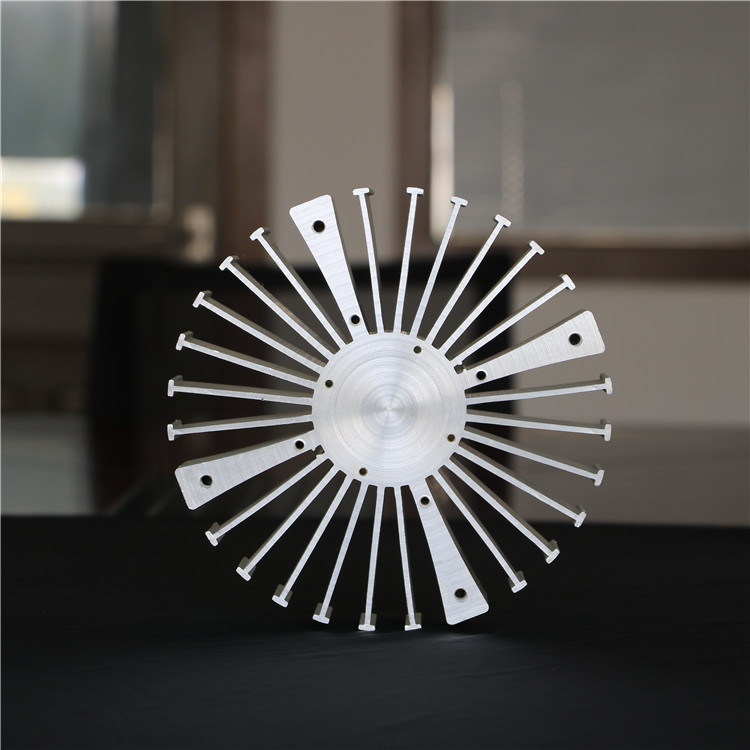
Round aluminum alloy heat sinks are thermal management components used to transfer heat away from electronic devices and mechanical assemblies. Their circular configuration can be useful where installation space, component geometry, or airflow arrangements favor a round cooling structure. Aluminum alloy provides a practical balance of thermal conductivity, weight, and manufacturability.
A heat sink collects heat from a connected component and releases it to the surrounding environment. Its thermal performance depends on the contact surface, material properties, heat transfer area, and airflow conditions. A suitable heat sink must also fit the available mounting space and maintain reliable thermal contact during operation.
Alumag Aluminum Tech (Taicang) Co., Ltd. is a make-to-order supplier specializing in customized metal products. Its aluminum heat sink offerings support projects requiring specific configurations and component dimensions.
A round heat sink uses a circular external profile to accommodate particular mounting arrangements or equipment layouts. Depending on the design, it may include a central base and surrounding fins that increase the available surface area for heat transfer.
The circular shape alone does not determine cooling performance. Fin spacing, overall diameter, height, material thickness, and the location of the heat source all influence thermal behavior.
The contact surface transfers heat from a component into the heat sink body. A properly matched contact area helps reduce unnecessary thermal resistance.
Surface flatness, roughness, mounting pressure, and thermal interface materials all affect heat transfer across the contact. These factors are especially important where the electronic component has a small or concentrated heat-generating area.
Heat sink fins increase the area exposed to the surrounding air. The appropriate fin geometry depends on whether the cooling system operates with natural convection or forced airflow.
Narrow fin spacing can increase surface area, but it may also restrict airflow. A suitable design balances heat transfer area, fin thickness, spacing, and operating conditions.
Heat sinks can be classified according to their materials, the power requirements of the equipment, and their structural or operating characteristics.
Heat sinks can be divided into three common material categories: aluminum radiators, copper radiators, and steel radiators.
Material Type | General Characteristics |
|---|---|
Aluminum Radiator | Lightweight, good thermal conductivity, and suitable for many electronic cooling applications |
Copper Radiator | Higher thermal conductivity than typical aluminum alloys but greater weight |
Steel Radiator | Lower thermal conductivity than aluminum and copper, with properties that depend on the steel grade |
Aluminum alloy heat sinks are frequently selected when low weight, thermal performance, and manufacturing practicality must be considered together. Copper may be considered when high thermal conductivity is a priority. Steel is less common for compact electronic heat sinks but may be used in particular thermal or structural assemblies.
According to the power used, radiators can be divided into low-power, medium-power, and high-power radiators.
Heat Sink Category | General Selection Considerations |
|---|---|
Low-Power Radiator | Heat generation, available surface area, and passive airflow |
Medium-Power Radiator | Thermal resistance, fin geometry, mounting conditions, and ventilation |
High-Power Radiator | Heat load, temperature limits, available airflow, and potentially active cooling |
These categories describe broad cooling requirements rather than fixed wattage ranges. Actual suitability depends on the device, maximum permissible temperature, ambient conditions, and heat sink design.
Heat sinks can also be considered according to their structural characteristics and cooling methods. Common design distinctions include finned and non-finned structures, compact and larger-area designs, and passive or fan-assisted cooling arrangements.
The appropriate configuration depends on the intended equipment, available space, and heat dissipation requirements. A round aluminum heat sink should therefore be evaluated based on its geometry and operating environment, rather than its external shape alone.
Aluminum alloys are widely used in heat sink production because they conduct heat more effectively than many common structural metals while remaining relatively lightweight. This combination makes aluminum suitable for electronic housings, lighting equipment, and industrial thermal components.
Thermal conductivity differs among aluminum alloy grades. The selected material must be considered alongside the complete heat sink design.
Aluminum alloy has a lower density than copper and steel. A lightweight heat sink can reduce the additional mass placed on equipment structures, mounting assemblies, or electronic components.
The final component weight depends on its diameter, height, fin design, and material volume. Weight requirements should be considered together with the necessary thermal performance.
Round heat sinks can be incorporated into equipment with circular mounting arrangements or restricted installation areas. Depending on the design, a circular fin layout may accommodate airflow approaching from different directions.
However, each application requires assessment of component dimensions, surrounding clearances, and airflow restrictions.
The dimensions and geometry of a round heat sink influence how it performs and how it fits within an assembly. Custom design requirements may include the external diameter, overall height, mounting details, and heat transfer surface.
Clearly defined drawings help align the finished component with the intended device configuration.
Material quality is an important factor in heat sink performance. The purity, composition, thickness, and processing accuracy of the selected material can influence the thermal and mechanical properties of the finished component.
Materials with higher thermal conductivity generally offer less resistance to heat flow within a comparable geometry. However, conductivity alone is not enough to determine the effectiveness of a complete radiator. Heat sink dimensions, surface contact, convection, and the surrounding environment must also be considered.
Aluminum alloy composition affects thermal conductivity, strength, manufacturability, and other properties. Different grades may be selected according to the balance required between thermal and mechanical performance.
Material suitability should be evaluated based on the actual application rather than assuming that every aluminum alloy offers identical heat transfer properties.
The thickness of a heat sink base influences how heat spreads from the source to other sections of the radiator. A base that is too thin for the application may not spread concentrated heat effectively.
Excessive thickness adds weight and material without necessarily producing a proportional improvement in cooling. Suitable dimensions depend on the heat source area and overall component design.
When selecting between aluminum, copper, and steel radiators, buyers should consider thermal conductivity, density, corrosion conditions, manufacturing requirements, and cost.
For many electronic applications, aluminum alloy provides a practical combination of heat transfer capability and manageable component weight. Copper may be useful in more demanding heat-spreading applications, while steel is generally not the first choice when thermal conductivity is the primary requirement.
The manufacturing process can directly influence the performance of aluminum radiators. Material defects, dimensional inaccuracies, and unsuitable contact surfaces may increase thermal resistance or affect the reliability of the finished assembly.
Consistent material selection and suitable manufacturing methods are therefore important when evaluating heat sink quality.
Processing accuracy affects the finished dimensions and installation fit of a heat sink. Diameter, height, mounting interfaces, and contact surfaces should correspond to the requirements of the intended assembly.
Inaccurate dimensions may affect alignment or reduce effective contact with the heat-generating component. Critical dimensions should be defined on the applicable engineering drawing.
Manufacturing defects such as cracks, shrinkage cavities, and internal voids can affect heat transfer and structural integrity.
These defects are particularly associated with certain casting conditions, although defect types differ across manufacturing processes. Appropriate quality control should consider the actual method used to produce the component.
The surface condition of an electronic heat sink is important for assembly and thermal performance. Visible damage, unsuitable roughness, and poor flatness can interfere with proper mounting and heat transfer.
Contact surfaces should be evaluated according to the requirements of the mating component and the thermal interface arrangement.
Relevant inspections may include external dimensions, contact surface condition, visible defects, and mounting features.
Inspection criteria should be established based on the product drawing and intended application. Critical features may require additional verification when they directly affect thermal contact or assembly fit.
Heat transfer from an electronic component to a radiator occurs through the contact interface before heat is distributed throughout the heat sink.
Surface roughness and flatness directly influence contact thermal resistance. Even apparently smooth metal surfaces contain microscopic irregularities that can create small air gaps when two components are joined.
These gaps may increase resistance to heat flow. An appropriate thermal interface material can help reduce the influence of surface irregularities.
Surface flatness determines how closely the heat sink can contact the mating component. Excessive unevenness may reduce the effective contact area.
Roughness also affects contact conditions. A suitable finish depends on the application, material properties, contact pressure, and selected thermal interface material.
Mounting pressure influences the contact between the heat source and the radiator. Insufficient pressure may leave unnecessary gaps, while excessive pressure can damage components or deform mounting structures.
Fastening arrangements should follow the requirements of the electronic component and the complete cooling assembly.
For fan-assisted heat sinks, the arrangement of fins influences airflow resistance and the pressure drop across the cooling structure.
Dense or restrictive fin layouts may require greater fan pressure to maintain airflow. Passive cooling arrangements have different airflow considerations because movement depends primarily on natural convection.
A heat sink's thermal performance depends on several connected stages: heat transfer through the contact interface, conduction within the metal, and heat rejection into the surrounding air.
Improving one stage does not always compensate for limitations in another. The complete thermal path must be considered when selecting a suitable heat sink.
Round aluminum alloy heat sinks can be considered for electronic and industrial equipment where their dimensions, mounting arrangement, and thermal properties match the cooling requirements.
LED lighting assemblies generate heat that must be managed to maintain suitable operating temperatures. Round aluminum heat sinks may be used in compatible circular lighting housings and LED modules.
Heat sink selection should account for the LED module's thermal requirements, installation orientation, and available ventilation.
Power conversion components, semiconductor modules, and other electronic devices may require additional surface area to dissipate heat.
A round radiator can be considered where its geometry fits the device layout and provides an appropriate thermal connection.
Industrial control assemblies may contain heat-generating electronic components operating within enclosed or ventilated equipment housings.
Aluminum heat sinks can support thermal management when correctly sized for the internal temperature, airflow, and component heat output.
Certain compact devices have limited internal mounting space. Round heat sinks may be considered when the available envelope or component shape favors a circular design.
The cooling solution must be evaluated with surrounding components, enclosure ventilation, and permissible operating temperature in mind.
Choosing a suitable heat sink requires more than matching its external diameter to the available installation space. The thermal load, contact area, airflow, and temperature limits determine whether the selected geometry is appropriate.
Identify the heat that the electronic component must dissipate during operation. Electrical input power should not automatically be treated as heat output, because some devices convert part of their input into useful work or light.
The applicable operating condition should include sustained and peak heat generation where relevant.
The maximum permitted component temperature is an important selection parameter. Designers must also consider the expected ambient temperature and heat generated by nearby equipment.
The difference between the permissible temperature and the surrounding air temperature defines part of the available thermal budget.
Confirm the allowable heat sink diameter, height, mounting clearance, and distance from surrounding components.
A larger heat sink may provide more surface area, but it must still fit the equipment and permit adequate air movement.
Passive cooling relies on natural air movement caused by temperature differences. Forced convection uses a fan or another airflow source to increase heat removal.
The required heat sink geometry may differ significantly between these cooling methods.
The heat sink contact area should be compatible with the heat-generating component. Surface flatness, mounting pressure, and interface material all affect contact resistance.
Proper installation is essential even when the selected heat sink has suitable bulk material properties.
Custom aluminum heat sinks may be needed when standard products do not match equipment dimensions or thermal requirements.
Alumag's make-to-order business focuses on customized metal products. Buyers can communicate their required heat sink configuration through technical drawings and application information.
Important dimensional information may include the overall diameter, height, mounting base dimensions, fin geometry, and available installation space.
These details allow the profile to be evaluated against the intended equipment layout.
The selected aluminum alloy should reflect the required balance of thermal conductivity, strength, manufacturability, and operating conditions.
When a project specifies a particular alloy or material standard, that information should accompany the drawing.
Buyers should define the contact surface, mounting hole arrangement, fastening method, and any features needed for installation.
Contact surface requirements should be clearly identified where they affect thermal performance.
The following information helps define the scope of a custom heat sink inquiry:
Required Information | Details to Provide |
|---|---|
Product Drawing | 2D or 3D geometry |
Heat Sink Dimensions | Diameter, height, and mounting dimensions |
Material | Required aluminum alloy, if specified |
Thermal Requirements | Heat load and component temperature limits |
Cooling Conditions | Natural or forced convection |
Installation | Mounting method and available space |
Quantity | Required order volume |
Special Requirements | Critical tolerances or surface specifications |
Neither shape is automatically better. A round heat sink may suit circular mounting layouts or particular airflow arrangements, while rectangular models may fit flat electronic modules or confined equipment spaces more effectively. Actual performance depends on surface area, material, geometry, and cooling conditions.
Yes, provided the heat sink is adequately sized for natural convection and the surrounding environment allows sufficient air movement. Passive cooling performance depends on orientation, fin spacing, temperature difference, and the available ventilation.
Not necessarily. A larger heat sink often provides more surface area, but cooling effectiveness also depends on airflow and thermal contact. Increasing size without considering fin spacing or enclosure restrictions may produce limited additional benefit.
Thermal paste fills microscopic gaps between contacting surfaces and reduces the thermal resistance caused by trapped air. It should be applied according to the requirements of the component and the selected thermal interface material.
Yes. Aluminum heat sinks can be thermally connected to copper components where the interface is properly designed. In applications exposed to moisture or electrolytes, galvanic corrosion between dissimilar metals should also be considered.
Orientation influences the movement of warm air around the fins. Natural convection depends on buoyancy-driven airflow, so an orientation that restricts rising air may reduce cooling performance.
Fan-assisted systems may be less sensitive to orientation, but their performance still depends on airflow direction and surrounding obstructions.
Dust can obstruct airflow passages and accumulate on heat transfer surfaces. This may increase operating temperatures, particularly in fan-assisted systems with narrow fin gaps. Periodic cleaning should follow the equipment manufacturer's maintenance and electrical safety instructions.
A dimensioned 2D drawing or 3D model is useful for specifying diameter, height, contact surfaces, mounting features, and critical tolerances. Buyers should also provide the intended cooling conditions and application requirements to support technical discussions.
Standard of heat sink
1. The quality of material (purity, thickness, processing accuracy, etc.) and
manufacturing process (cracks, shrinkage cavities, etc. caused by casting), poor
material and rough and defective process will directly affect the thermal conductivity
of the radiator;
2. The surface roughness and flatness of the electronic heat sink
contact table directly affect the contact thermal resistance and pressure drop


