Tel:+86-512-53640771-125 E-mail: export@alumag.com.cn
- All
- Product Name
- Product Keyword
- Product Model
- Product Summary
- Product Description
- Multi Field Search

Views: 0 Author: Site Editor Publish Time: 2026-08-08 Origin: Site


Unprotected aluminum naturally forms an oxide layer, but relying on this baseline in uncontrolled outdoor environments compromises both structural integrity and long-term aesthetics. When you expose raw metal to harsh weather, the natural oxidation process is simply not robust enough to prevent deep pitting and structural degradation. Specifying the wrong surface finish for outdoor applications leads to premature chalking, galvanic corrosion, coating delamination, and ultimately, costly replacement cycles. Engineers cannot afford to guess which coating will survive a coastal storm or decades of intense ultraviolet radiation. To mitigate failure risks, engineers and procurement teams must evaluate surface finishes through a strict technical framework based on environmental severity, mechanical wear, and lifecycle durability. Selecting the proper protective layer requires a deep understanding of how specific coatings interact with the metal substrate under continuous thermal and environmental stress. This technical evaluation ensures that architectural and structural components maintain their mechanical properties and visual appeal throughout their intended operational lifespan.
Type III hard-coat anodizing and architectural powder coating represent the industry standards for balancing outdoor durability with cost-efficiency.
Coastal or high-salinity environments require specific chemical pre-treatments and high-performance coatings (such as PVDF) to prevent pitting and filiform corrosion.
Structural geometry dictates finishing success; processing a hollow aluminum extrusion requires specialized racking and application techniques to ensure uniform coverage on complex external and internal surfaces.
Upfront finishing costs must be weighed against maintenance requirements, repairability, and the intended asset lifespan to determine true ROI.
Defining the success criteria for outdoor architectural and structural components requires a rigid baseline. Structural stability must remain absolute, color retention must align with strict architectural standards, and zero localized pitting is the only acceptable outcome. Achieving these metrics means understanding exactly how environmental factors attack bare metal over time. When you deploy metal structures outdoors, they face a continuous barrage of environmental stressors that actively work to break down both the protective coatings and the underlying substrate.
We must analyze the primary environmental threats driving degradation. Ultraviolet radiation acts as a relentless force against synthetic polymers, breaking down molecular bonds in standard paints and causing rapid fading and chalking. Moisture and ambient humidity accelerate the baseline oxidation process, creating a constant threat of water ingress. Airborne particulates and chlorides, especially in coastal or industrial zones, drive aggressive galvanic and pitting corrosion. When salt breaches the natural oxide layer, it creates localized anodic and cathodic sites, rapidly destroying the structural integrity of the metal.
The baseline reality of a mill finish highlights why untreated metal fails. A mill finish represents the raw state of the metal directly from the extrusion die. These raw extrusions carry prominent die lines, surface blemishes, and microscopic manufacturing imperfections. These physical defects act as perfect initiation sites for localized corrosion. Moisture and contaminants settle into these microscopic grooves, accelerating the degradation process. Deploying an untreated profile in a permanent outdoor structure presents an unacceptable engineering risk, guaranteeing premature failure and severe aesthetic degradation.
Initial Surface Oxidation: Bare metal reacts with atmospheric oxygen, forming a thin, inconsistent oxide layer that offers minimal protection against aggressive pollutants.
Contaminant Accumulation: Airborne salts, industrial chemicals, and moisture settle into the microscopic die lines and surface imperfections left over from the extrusion process.
Localized Pitting Initiation: Chlorides break through the weak natural oxide layer, creating microscopic pits that compromise the smooth surface of the metal.
Galvanic Acceleration: If the aluminum contacts dissimilar metals in the presence of an electrolyte like rainwater, rapid galvanic corrosion consumes the aluminum substrate.
Structural Compromise: Deep pitting and material loss eventually reduce the load-bearing capacity of the component, necessitating complete replacement.
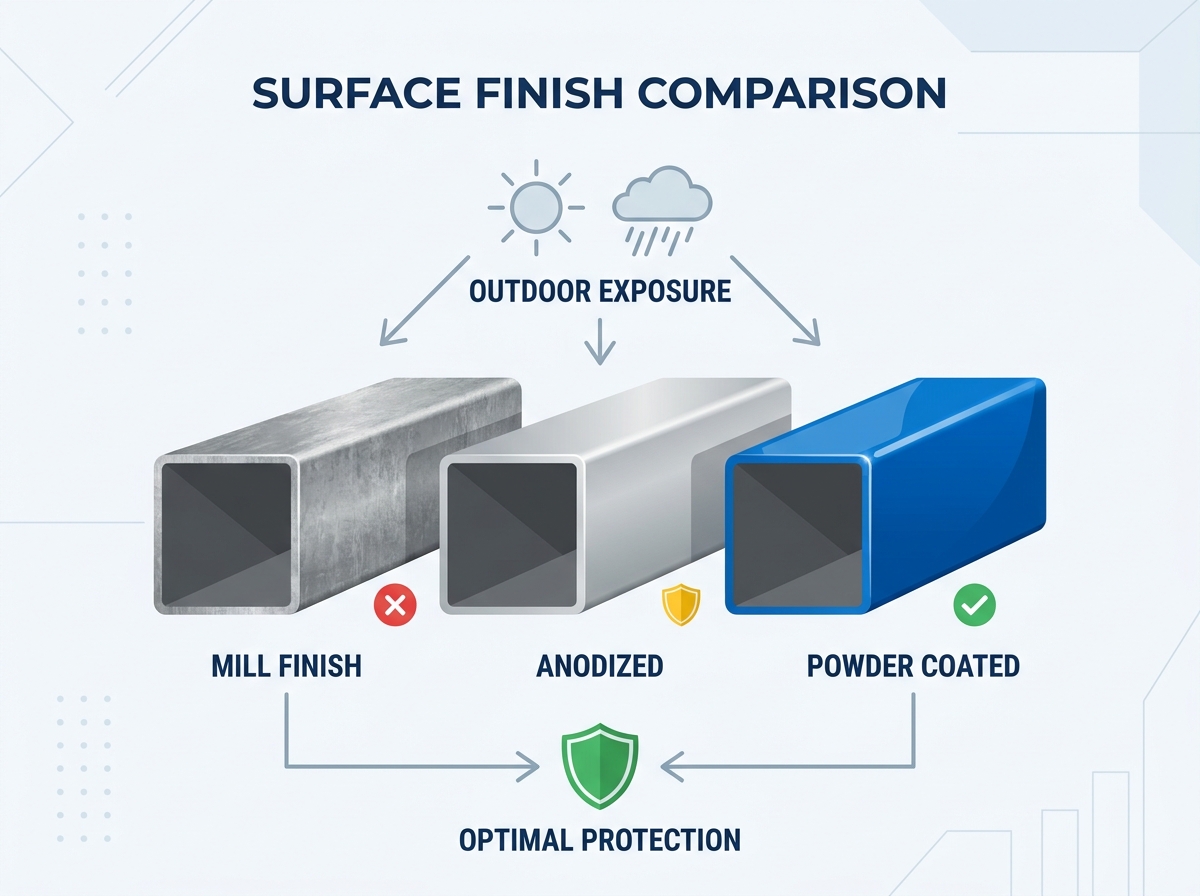
Anodizing utilizes a highly controlled electrochemical process to thicken and toughen the metal's naturally occurring anodic oxide layer. Technicians submerge the parts in an acid electrolyte bath, typically sulfuric acid, and pass a direct electrical current through the medium. The aluminum acts as the anode, and the current forces oxygen ions to combine with the aluminum atoms. This creates a highly porous, structured oxide layer that grows directly out of the base metal. After the desired thickness is achieved, the pores are sealed using hot water or chemical sealants to lock out contaminants.
This finish penetrates the metal substrate directly, making it physically impossible to chip, flake, or peel. Type III hard-coat anodizing provides exceptional abrasion resistance, far surpassing standard paints. It delivers a highly durable, metallic matte aesthetic that architects often prefer for modern designs. Because the coating is integrated into the metal, it handles mechanical wear from pedestrian traffic or maintenance equipment exceptionally well.
However, anodizing presents distinct limitations that engineers must consider. It offers a very limited color palette, mostly restricted to clear, bronze, and black tones. There is an inherent risk of color variation between production batches due to slight differences in alloy composition or bath temperature. Anodized surfaces remain vulnerable to highly acidic or alkaline environmental pollutants, which can etch the finish. Furthermore, the process highlights rather than hides underlying die lines. Achieving a premium look requires a rigorous chemical etching pre-treatment to smooth the surface before anodizing.
Architectural powder coating relies on the electrostatic application of dry thermoplastic or thermoset powder. Applicators use specialized spray guns to apply a positive electrostatic charge to the powder particles, which are then sprayed onto the grounded metal profile. The electrostatic attraction ensures an even coating, even on complex geometries. The profile then enters a curing oven, where thermal baking melts the powder into a thick, continuous protective skin. This cross-linking process creates a highly durable, impermeable barrier against the elements.
This method offers superior color matching capabilities, allowing for virtually any custom hue or texture. It provides excellent UV resistance when specifying AAMA 2604 or 2605 compliant powders, ensuring long-term color retention. The thick coating withstands mechanical knocks and abrasions during transport and installation. Crucially, powder coating delivers excellent coverage that completely masks extrusion lines and minor surface defects, providing a flawless, uniform appearance.
The primary drawback is its physical application nature. The coating sits on top of the metal substrate, meaning it remains susceptible to impact chipping under extreme localized stress. If the coating is breached, moisture can penetrate the barrier. Powder coating requires meticulous multi-stage pre-treatment to ensure proper adhesion. Failing to prepare the surface properly guarantees under-film corrosion, where oxidation spreads beneath the paint, leading to rapid delamination and failure.
PVDF coatings utilize advanced resin-based liquid systems, commonly known by trade names like Kynar 500. The formulation relies on incredibly strong carbon-fluorine bonds, which are among the strongest chemical bonds possible. These bonds resist degradation from harsh chemicals, airborne pollutants, and intense sunlight. The application involves a strict multi-coat process, typically requiring a specialized primer, a color coat, and sometimes a clear topcoat, all baked at high temperatures to cure the resins.
This represents the highest available tier of weather resistance in the architectural industry. PVDF provides unmatched UV and chemical protection, making it mandatory for monumental architectural projects and skyscrapers where maintenance access is severely limited. The coating maintains excellent flexibility under severe thermal stress, expanding and contracting with the metal without cracking. It resists chalking and fading better than any alternative, ensuring the building retains its original aesthetic for decades.
The disadvantages center around application complexity and environmental factors. PVDF involves a highly complex multi-coat application process that requires specialized, certified application facilities. Liquid paints also present environmental compliance considerations. Managing Volatile Organic Compounds (VOCs) during the manufacturing and curing stages requires expensive facility infrastructure, such as thermal oxidizers, to capture and destroy harmful emissions before they reach the atmosphere.
Finishing Technology | Application Method | UV Resistance Level | Abrasion Resistance | Surface Defect Masking |
|---|---|---|---|---|
Type II Anodizing | Electrochemical Bath | Moderate (Color dependent) | High | Poor (Highlights defects) |
Type III Hard-Coat Anodizing | Electrochemical Bath (Chilled) | Moderate | Exceptional | Poor |
Standard Powder Coating | Electrostatic Spray & Bake | Good | Moderate | Excellent |
AAMA 2605 Powder Coating | Electrostatic Spray & Bake | Exceptional | Moderate | Excellent |
PVDF Liquid Coating | Multi-coat Liquid Spray & Bake | Exceptional | Moderate | Good |
Environmental severity dictates your baseline finish selection. High-salt coastal environments present the most aggressive corrosion threat. These zones demand PVDF or high-build powder coating to seal the metal completely. You must pair these topcoats with a marine-grade non-chrome pre-treatment and an epoxy primer. Skipping the primer in marine zones guarantees filiform corrosion, a destructive process where thread-like filaments of oxidation spread rapidly beneath the coating.
Ground-level urban applications face entirely different threats. They benefit heavily from the superior scratch, wear, and impact resistance of Type III hard-coat anodizing. Pedestrian traffic, bicycles, and maintenance equipment easily scratch standard paints. Hard-coat anodizing withstands this daily mechanical abuse effortlessly, maintaining its integrity where liquid or powder coatings would quickly show severe wear and tear.
Industrial environments introduce heavy chemical exposure into the equation. Airborne pollutants, acidic rain, and manufacturing byproducts degrade standard finishes rapidly. These zones require finishes evaluated specifically for chemical resistance. Specialized fluoropolymers often provide the only reliable long-term protection here, as they resist chemical etching and maintain their protective barrier even when exposed to harsh industrial fallout.
Coating the interior walls of an aluminium hollow profile presents a severe technical difficulty for applicators. Liquid and powder spray systems operate strictly on line-of-sight and electrostatic attraction; they cannot reach deep internal cavities. Internal protection is only necessary in highly corrosive environments where moisture traps occur. In these rare cases, anodizing baths offer an advantage, as the liquid electrolyte can penetrate and protect these internal cavities far better than any spray system.
The Faraday Cage effect complicates powder coating significantly. Electromagnetic fields naturally repel charged powder particles in recessed areas, sharp internal corners, or deep channels. The interior channels of an aluminum rectangular profile are notoriously difficult to coat evenly due to this phenomenon. Applicators must mitigate this by carefully adjusting gun voltage, utilizing specialized nozzle configurations, and altering the spray angle to force powder into these resistant zones.
Engineers must consider the balance between aesthetic masking and surface inspection. Heavy baked-on powder coatings conceal minor extrusion die defects easily, providing a uniform, flawless appearance regardless of minor substrate flaws. Conversely, translucent anodizing requires pristine substrate surfaces. Any scratch, die line, or handling mark becomes permanently visible under an anodized finish, requiring strict handling protocols before the finishing stage.
Extreme outdoor temperature fluctuations heavily impact coating adhesion. Aluminum possesses a high coefficient of thermal expansion, meaning it expands and contracts significantly under thermal stress. Applied coatings must possess the elasticity to flex alongside the metal substrate. Rigid coatings will inevitably micro-crack, allowing moisture to penetrate the barrier and initiate under-film corrosion.
PVDF liquid coatings offer superior flexibility in this regard. They handle dramatic thermal cycling without micro-cracking, making them ideal for environments with massive temperature swings. Powder coatings vary in flexibility based on their specific resin formulation; polyurethane powders generally offer better flexibility than standard epoxies. Integrated anodic layers expand naturally with the substrate, eliminating the risk of thermal-induced delamination entirely since the coating is part of the metal itself.
Evaluating the long-term viability of a finish requires looking past the initial application effort. PVDF requires multiple coats and high-temperature curing, demanding significant initial labor and material investment. Standard powder coating balances material efficiency with rapid application speeds, making it highly efficient for large-volume runs. Hard-coat anodizing demands significant electrical energy and extensive chemical bath maintenance, requiring specialized facility management.
Contrast the maintenance and repairability of each finish in the field. Cleaning protocols vary significantly based on the surface texture and chemical resistance of the coating. Powder-coated surfaces allow for practical spot repairs in the field. Technicians can sand, prime, and touch up scratched paint relatively easily using color-matched liquid paints. Seamlessly repairing anodized surfaces on-site is nearly impossible. Severely damaged anodized components typically require complete removal and replacement, as field-applied paints will never match the optical properties of the anodic layer.
Long-term maintenance schedules dictate the true value of the finish. High-performance coatings like PVDF require minimal intervention beyond standard water washing to remove surface dirt. Standard powder coatings may require periodic waxing or specialized cleaning agents to maintain their gloss levels after a decade of UV exposure. Anodized surfaces, while highly durable against scratches, can accumulate dirt in their microscopic pores if not sealed perfectly, requiring aggressive chemical cleaning to restore their original appearance.
Finish Type | Field Repairability | Cleaning Requirements | Typical Lifespan (Outdoor) |
|---|---|---|---|
Type III Anodizing | Extremely Poor | Moderate (Requires specific pH cleaners) | 20+ Years |
Powder Coating (AAMA 2604) | Good (Sand and paint) | Low (Standard washing) | 10-15 Years |
PVDF (AAMA 2605) | Moderate (Requires specialized touch-up) | Very Low | 20+ Years |
Coating delamination remains the most severe implementation risk in any architectural project. This catastrophic failure stems directly from poor surface preparation or contaminated pre-treatment baths. Specify strict adherence to AAMA standards for pre-treatment in all vendor contracts. Require documented salt-spray testing from your extrusion partner before approving mass production. Verify their chemical wash stages independently to ensure no oils or oxides remain on the substrate before coating.
Batch-to-batch color inconsistency plagues large-scale projects, especially those spanning multiple production runs. Anodizing is particularly susceptible to slight hue shifts due to minute variations in bath chemistry or alloy composition. Establish acceptable delta-E color difference ranges in your contract. Require physical sign-off on boundary samples before mass production begins. Maintain these master samples in a dark, climate-controlled environment to prevent fading, using them as the absolute reference for all future deliveries.
Transit and handling damage destroys perfect finishes before installation even begins. Protect the hollow aluminum extrusion during transport by mandating strict packaging protocols. Specify the application of low-tack protective surface films immediately post-finishing. Ensure the film adhesive is UV-stable so it does not bake onto the profile during outdoor staging at the construction site. Require custom wooden crating with foam interleaving to prevent metal-to-metal contact during shipping.
Pre-treatment Verification: Audit the applicator's chemical wash line to ensure proper alkaline cleaning, de-oxidizing, and conversion coating stages are maintained at correct concentrations.
Adhesion Testing: Mandate cross-hatch adhesion testing (ASTM D3359) on random samples from every production batch to verify the coating bond.
Cure Verification: Require solvent rub tests (MEK rub test) to confirm that powder coatings and PVDF have fully cross-linked in the curing oven.
Thickness Measurement: Utilize dry film thickness (DFT) gauges to ensure the coating meets the minimum mil-thickness specified by AAMA standards.
Visual Inspection: Conduct final inspections under standardized D65 daylight bulbs to check for orange peel, inclusions, or color variations against the master boundary samples.
Selecting the optimal surface finish requires a rigorous evaluation of environmental threats, mechanical demands, and long-term maintenance capabilities. Defaulting to standard finishes without analyzing the specific deployment zone guarantees premature failure and aesthetic degradation. By matching the coating technology to the exact environmental stressors, engineers ensure structural longevity and visual stability.
Consult with a specialized extrusion partner to evaluate local environmental stressors and chemical threats before finalizing specifications.
Request physical finish samples to verify color consistency, gloss levels, and surface texture under actual site lighting conditions.
Review accelerated weathering test data specific to your exact deployment zone to confirm long-term performance claims.
Establish clear quality control tolerances and boundary samples before initiating mass production to prevent batch inconsistencies.
Specify strict packaging and handling protocols to protect the finished profiles during transit and on-site staging.
A: Yes, but it introduces redundancy and increases production effort. You must perform aggressive mechanical etching or specialized chemical surface preparation to achieve proper adhesion. Without breaking the smooth anodic layer, the powder coating will eventually delaminate under thermal stress.
A: Superficial white oxidation begins within weeks of moisture exposure. Prominent dark streaks along extrusion lines follow shortly after. Structural degradation timelines depend heavily on airborne salts and humidity, but aesthetic failure is almost immediate in harsh environments.
A: AAMA 2604 mandates five years of South Florida exposure testing for color retention and chalk resistance. AAMA 2605 requires ten years of identical exposure. AAMA 2605 represents the highest architectural grade for extreme UV environments and monumental structures.
A: Yes. Total exposed surface area dictates material usage. Complex internal geometries create Faraday cage challenges, requiring slower application speeds. Masking requirements and racking density also directly impact the final processing effort per part.
A: PVDF liquid coatings and marine-grade powder coatings provide the best defense. However, the topcoat alone is insufficient. The underlying marine-grade chemical pre-treatment and epoxy primer are critical to preventing filiform corrosion in high-salinity zones.