Tel:+86-512-53640771-125 E-mail: export@alumag.com.cn
- All
- Product Name
- Product Keyword
- Product Model
- Product Summary
- Product Description
- Multi Field Search

Views: 0 Author: Site Editor Publish Time: 2026-11-04 Origin: Site


Picture a familiar shop floor scenario. A machinist sets up a seemingly perfect billet, dials in the coordinates, and hits start. The end mill makes its first heavy pass. Suddenly, the material warps out of tolerance. This frustrating and costly machining error rarely stems from a programming fault. More often than not, it is the direct result of trapped internal stresses hiding within an Aluminum Rod that bypassed proper stress relief.
Standard extrusion and drawing processes are violent. Uneven cooling rates and immense mechanical forces naturally trap severe residual stresses deep inside the crystalline structure. We call this phenomenon metal memory. It causes the material to bow or twist when subjected to cutting, drilling, or environmental temperature fluctuations. Stretcher straightening serves as the definitive mechanical solution to this metallurgical challenge. By applying immense and controlled tensile force, this procedure permanently eradicates internal tension. It ensures that every piece of raw stock adheres to strict geometric tolerances.
The following sections will deconstruct the exact science behind this vital process. We will explore the step-by-step mechanical journey and analyze shifting industry trends demanding higher precision. Furthermore, we will explain why specifying stress-relieved materials is an absolute necessity for applications ranging from aerospace components to commercial architectural framing.
Stretcher straightening utilizes precise longitudinal tensile force to stretch extruded stock slightly past its yield point, permanently neutralizing chaotic internal stresses.
Unlike conventional roller methods that only mask surface-level deformities, stretching guarantees uniform structural alignment across the entire cross-section of the material.
This critical stress-relief process drastically enhances machinability. It completely prevents unexpected warping, bowing, or spring-back during rigorous CNC operations.
Achieving absolute linear perfection is a non-negotiable requirement for high-precision engineering sectors, including advanced robotics and specialized architectural components.
At its core, stretcher straightening is a specialized cold-working metallurgical process designed to correct dimensional inaccuracies. Raw metal is firmly gripped at both ends by heavy-duty hydraulic machinery and pulled longitudinally. Instead of merely bending the surface to look straight, this method forces the internal molecular structure to realign.
To truly grasp how this works, one must look at the physics of metal deformation. When tension is initially applied, the alloy stretches elastically. If the machine were to release the grip at this stage, the metal would simply snap back to its original bowed shape. However, the stretcher pushes the material purposefully beyond this elastic phase until it reaches its yield point. This is the specific mechanical threshold where plastic, or permanent, deformation begins.
By elongating the stock by a carefully calculated margin, typically between 1 percent and 3 percent of its total length, the internal grain boundaries shift. This microscopic realignment permanently erases the trapped mechanical energy generated during the initial extrusion phase. The result is a structurally stabilized billet that remains perfectly neutral.
Traditional correction methods, such as rotary or cross-roll straighteners, operate by forcing the metal through a series of offset concave rollers. While this aggressive bending action can coerce a rod back into a visually straight line, it is fundamentally flawed for precision applications. Roller straightening only manipulates the outer skin of the material. It actually introduces new localized stresses into the surface layers while leaving the core residual stress entirely intact.
In stark contrast, stretcher straightening treats the entire volume of the metal simultaneously. By applying uniform tension across the whole cross-section, it eliminates hidden internal forces rather than just sweeping them under the rug. This ensures the material behaves predictably during subsequent manufacturing stages.
Transforming a stressed and bowed extrusion into a precision-grade component requires massive industrial machinery and delicate computerized oversight. The journey inside a stretching facility is a masterclass in controlled force.
The operation begins when the raw extrusion is transferred onto the heavy steel bed of the stretcher. Massive hydraulic jaws, known as grippers, clamp down on both ends. The engineering of these jaws is critical. They must apply enough radial pressure to prevent catastrophic slipping under hundreds of tons of tension, yet they cannot crush the profile. Operators frequently use specialized serrated grip pads that bite securely into the extreme ends of the metal. These gripped sections are designated as scrap and will be trimmed away later.
Once secured, a low hum fills the facility as massive hydraulic cylinders begin to retract, pulling the material longitudinally. This is not a sudden or violent jerk. It is a slow and meticulously monitored pull. Modern equipment utilizes programmable logic controllers and sensitive load cells to dictate the exact tonnage applied. The required pull force is dynamically calculated based on the specific alloy grade, its temper, and the precise cross-sectional area of an Aluminum round bar to ensure the pull is perfectly optimized.
As hydraulic tension mounts, the metal approaches its elastic limit. At the critical moment of plastic deformation, the material visibly gives. Any twisting, camber, or bowing present in the raw extrusion is physically pulled out as the grain structure aligns with the direction of the tension. Once the target elongation percentage is achieved, the hydraulic pressure is carefully bled off. The metal undergoes a microscopic amount of elastic spring-back, but the plastic deformation remains. The jaws open, leaving behind a perfectly straight and stress-free product ready for the saw.
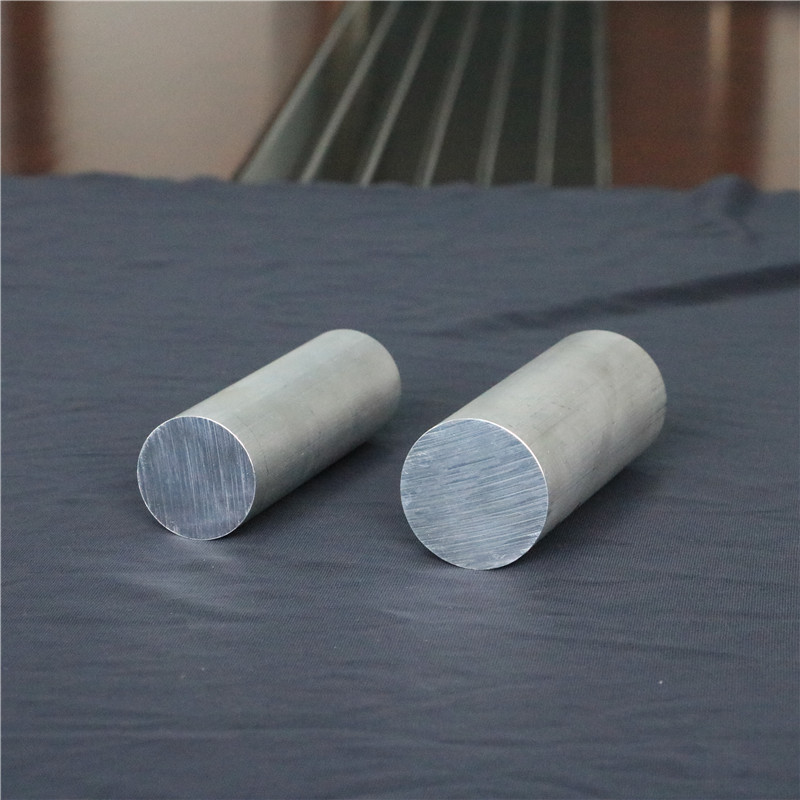
In the realm of precision engineering, straightness is never left to subjective visual interpretation. It is a strictly defined parameter measured with calibrated lasers and dial indicators.
Within the framework of Geometric Dimensioning and Tolerancing, straightness dictates how much a feature can deviate from a mathematically perfect line. For cylindrical stock, the straightness tolerance zone is defined as a theoretical cylinder. For a part to pass inspection, its entire median line must fit completely inside this theoretical boundary. If a blueprint specifies a straightness tolerance of 0.005 inches per foot, no segment of the material can bow outside that microscopic cylindrical boundary over any 12-inch span.
Raw extruded profiles virtually never meet tight tolerance callouts due to the chaotic thermal dynamics of the extrusion press. Stretcher straightening bridges this gap. It is the empirical solution that allows modern manufacturers to consistently meet and exceed stringent international specifications, such as ASTM B221 or EN 755, which standard roller straighteners routinely fail to achieve.
Looking closely at recent market data, the global manufacturing sector is experiencing an uncompromising push toward tighter raw material tolerances. Driven by the rapid expansion of electric vehicle manufacturing and aerospace miniaturization, automated lights-out machining facilities demand absolute linear perfection.
Industry analysts note that the demand for stress-relieved and stretcher-straightened materials has surged dramatically over the past five years. Automated bar feeders and high-speed Swiss-style CNC lathes require flawless stock. A bowed piece of metal spun at 10,000 RPM creates severe whip. This vibration destroys spindle bearings, shatters carbide tooling, and triggers machine sensor faults. Consequently, relying on outdated surface-straightened stock is rapidly becoming a severe liability for modern machine shops.
Beyond meeting modern automation requirements, the most immediate benefit of a stress-relieved billet is its behavior in the vice. When a machinist aggressively mills a slot into a stressed part, the removal of material disrupts the internal balance of tension and compression. This causes the part to spontaneously twist. Stretcher straightening eliminates this nightmare completely. The material remains dimensionally dead-stable regardless of how much mass is machined away, drastically reducing scrap rates and saving countless hours of setup time.
The metallurgical stability unlocked by this process makes it mandatory for several critical industries where component failure or slight misalignment carries heavy consequences.
In the commercial glazing industry, structural materials must be flawlessly straight. An aluminum rod for windows is frequently utilized as the internal backbone for heavy-duty sliding mechanisms, multi-point locking linkages, and reinforced mullions. If these internal components have even a fractional bow, the window mechanism will bind. This creates excessive friction that accelerates wear and prevents weather seals from compressing uniformly. Stretcher straightening guarantees the perfect geometric alignment required to keep massive architectural glass systems airtight and functional for decades.
In aerospace and advanced robotics, dynamic loads and extreme temperature fluctuations are the norm. Actuator shafts, structural tie-rods, and linear motion guides must maintain absolute straightness. A bowed linkage in an aircraft control system could introduce fatal slop or binding. The stress-relieved nature of stretched metal ensures that these critical components will not slowly distort over time due to the gradual and natural release of trapped internal tension.
To make informed procurement decisions, buyers must understand how stretching stacks up against alternative mechanical correction methods available on the market. The table below highlights the core differences.
Straightening Method | Process Mechanism | Internal Stress Relief | Best Application |
|---|---|---|---|
Stretcher Straightening | Longitudinal pulling past yield point | Complete cross-sectional relief | Precision CNC machining, aerospace, robotics |
Rotary or Cross-Roll | Continuous bending through offset rollers | None. Hardens outer skin only | High-volume, low-precision commercial goods |
Press Straightening | Manual hydraulic pressing on high spots | Highly localized, leaves global stress | Salvaging oversized or ultra-thick materials |
Selecting the correct raw stock requires looking far beyond just the basic alloy designation. Engineers must actively verify the finishing processes utilized by the manufacturer to ensure optimal performance on the shop floor.
When sourcing precision materials, auditing the supplier capabilities is a mandatory step. Ask your metallurgical supplier directly about their stretcher straighteners and maximum tonnage capacity. Premium manufacturers provide extensive options. You can specify rods with diameters ranging from 5mm up to 300mm, tailored to exact custom lengths. Always request material test reports that certify the exact straightness tolerances. Suppliers who invest heavily in robust stretching equipment are the ones committed to producing aerospace-grade reliability.
Different alloys react uniquely to the stretching process based on their inherent yield strengths. A high-strength aerospace alloy like 7075 requires exponentially more hydraulic tonnage to stretch than a standard architectural 6061 alloy. Specifically, pay close attention to temper designations. In the aluminum industry, the suffix 51 specifically denotes that the material has been stress-relieved by stretching.
For example, a T6 temper indicates the material was solution heat-treated and artificially aged. However, it likely still contains severe internal stresses from the quench. A T651 temper indicates the material underwent the exact same heat treatment but was subsequently stretched by 1 percent to 3 percent. Specifying T651, T451, or T351 is the most reliable way to guarantee dimensional stability on your CNC machines.
Stretcher straightening is far more than a cosmetic fix for bent metal. It is a foundational metallurgical process that permanently sets the linear accuracy and internal stability of your raw materials. By pulling the metal just past its yield point, this unique method completely eradicates harmful residual stresses that cause unpredictable warping during manufacturing.
Stop fighting your materials. Investing in properly stress-relieved components prevents costly machining errors and preserves expensive tooling. Whether you are machining complex aerospace housings or sourcing a precision Aluminum Rod for architectural assemblies, choosing the right foundation is critical. Evaluate your specific load requirements, required diameters, and machining speeds. Then, explore the comprehensive inventory of stretcher-straightened, aerospace-grade materials at Alumag Aluminum to ensure your next production run is flawless.
The primary difference lies in the mechanical stress-relief process. The T6 temper indicates that the metal has been solution heat-treated and artificially aged to achieve maximum strength. However, the rapid cooling phase traps severe internal stresses within the metal. The T651 temper signifies that the material underwent the exact same heat treatment but with an added critical step: stretcher straightening. By elongating the material by 1 percent to 3 percent, internal stresses are permanently relieved, making T651 exceptionally stable for heavy machining.
No, stretcher straightening does not weaken the material. It actually improves its overall mechanical reliability. The process stretches the metal just past its elastic limit into plastic deformation. This slight elongation aligns the internal grain structure without negatively impacting the ultimate tensile strength or yield strength. By removing unpredictable internal forces, the stock becomes highly stable and predictable during aggressive cutting operations.
While highly effective and standard practice for aluminum, titanium, and copper, stretcher straightening can also be applied to steel. The basic metallurgical principles of yield stress and plastic deformation apply universally to ductile metals. However, because steel possesses a much higher yield strength, the machinery required must be exponentially more powerful to achieve the necessary elongation. This makes the process more common in the non-ferrous metal industry.
Architectural applications require exact geometric alignment for safety, insulation, and daily functionality. Window frames and sliding tracks rely on perfect straightness to ensure massive glass panes fit securely without uneven pressure points that could cause shattering. A bowed internal rod will compromise airtight weather seals, leading to energy leaks, and cause moving parts to bind and fail prematurely. Stress-relieved stock guarantees the seamless assembly and longevity of the entire window unit.
Typically, the stock is stretched between 1 percent and 3 percent of its original length. This precise percentage is carefully calculated by computerized control systems based on the specific alloy and cross-sectional diameter. It is the exact amount of tension required to pass the elastic limit and enter plastic deformation. This permanent elongation realigns the molecular structure and eliminates residual stresses without altering the target dimensions of the final product.
Standard extruded aluminum rods straight off the press generally have a straightness tolerance of about 0.0125 inches per foot of length. While this is acceptable for basic structural framing, it is entirely inadequate for high-speed CNC turning or precision linear motion guides. Stretcher straightening tightens this tolerance significantly, often achieving straightness deviations of less than 0.005 inches per foot, ensuring the rod spins true in automated machinery.
Warping after machining is almost always caused by the release of trapped internal stresses. When a rod is extruded and rapidly cooled, the outer layers cool faster than the core, creating a tense equilibrium of compression and tension. When a machinist mills away a section of that material, this delicate balance is destroyed. The remaining internal forces push and pull against the newly machined geometry, causing the part to spontaneously warp or twist. Using stretcher-straightened stock eliminates these internal forces before machining begins.