Tel:+86-512-53640771-125 E-mail: export@alumag.com.cn
- All
- Product Name
- Product Keyword
- Product Model
- Product Summary
- Product Description
- Multi Field Search

Views: 0 Author: Site Editor Publish Time: 2025-12-01 Origin: Site


Magnesium alloys are used everywhere, from cars to tools. But which one is the most common? Many people still guess wrong. The answer matters because alloy choice affects strength, weight, and cost. In this post, you’ll learn why the AZ-series—especially AZ31—leads the industry, and how its composition shapes real-world performance.
AZ31 holds the largest share of global Magnesium Alloy consumption, reaching roughly 60–70% in many markets. It appears in cars, tools, luggage, and structural parts because many industries need a material that stays light, strong, and affordable. It offers a performance–cost balance that most other grades struggle to match, and manufacturers trust it for large-volume production where reliability matters. It cuts machining time, reduces scrap loss, and helps teams control total project cost.
AZ31 contains aluminum, zinc, and magnesium in a carefully balanced ratio. This mix improves strength while maintaining very low weight, allowing parts to stay rigid under moderate loads. It forms well during extrusion or rolling, and it stays workable for teams that cut or shape metal every day. The composition also supports high machinability, so CNC operations stay smooth even during tight-tolerance tasks. It has moderate corrosion resistance, and many companies add surface treatments to improve this behavior.
AZ31 appears widely in automotive interiors. It supports steering wheels, seat frames, brackets, and control components that need to remain stiff but lightweight. It also powers consumer products. Many tool brands use it for housings or handles because it stays comfortable to hold and resists impact. Travel-goods manufacturers select AZ31 for suitcase frames, wheel structures, and foldable handles, since the alloy gives a strong frame without heavy metal weight. Many engineers choose it for lightweight structures where predictable mechanical performance is essential.
Factories rely on AZ31 because it performs well across multiple processes. Its CNC machinability lets teams produce smooth surfaces and detailed shapes without slowing down the line. It works well in extrusion and sheet forming, so designers can build everything from thin panels to thicker structural bars. Many facilities report fewer defects than when using high-aluminum alloys, which improves yield and reduces cost. The alloy lets products scale from prototype to mass production while keeping tooling adjustments minimal.
AZ31 can corrode more easily when exposed to salt, moisture, or chemicals. Many teams apply protective coatings such as PEO layers, conversion films, or sealed finishes to keep parts stable. It also performs poorly in high-temperature and high-load environments where creep resistance matters. Heavy-duty gear assemblies, engine components, or high-stress brackets often require stronger or more heat-resistant alloys. Engineers address these limits by using AZ31 only where its strengths match the project’s needs.
Leading companies integrate AZ31 into products that ship in massive volumes. Luggage brands use it for suitcase frames because it makes travel gear lighter without sacrificing durability. Automotive suppliers rely on AZ31 when building interior structures that need controlled deformation and long service life. Tool manufacturers select it for housings, handles, or light mechanical parts that require impact resistance and a stable feel. These brands choose AZ31 as a “default alloy” since it cuts cost, improves machining speed, and keeps product weight low.
AZ31 is ideal when weight matters and loads stay moderate. It works well if a team needs strong machinability, stable forming, or steady extrusion behavior. It also suits projects where cost control drives material choice, especially when scaling to high production volume. Industries such as consumer electronics, automotive interiors, travel goods, and light industrial equipment benefit most from its mix of performance and efficiency.
Application Type | Why AZ31 Fits | Typical Benefit |
Automotive interior parts | Light, rigid, easy to machine | Lower vehicle weight |
Power tool housings | Good impact resistance | Comfortable and durable |
Suitcase frames | Strong but very light | Better portability |
Extruded profiles | Stable forming behavior | Consistent quality |
Consumer products | Balanced cost and strength | Affordable manufacturing |
AZ61 offers higher strength than AZ31, and many teams depend on it when loads increase. It uses more aluminum, so its tensile strength rises while weight stays low. The alloy keeps good machinability, and it performs well under repeated stress. AZ31 bends or forms more easily, and AZ61 keeps its shape better during high-impact use. Many engineers select AZ61 when they need a stronger Magnesium Alloy that still supports efficient machining and stable production.
AZ61 works best in structures that face constant pressure or vibration. It handles foot pedals, brackets, and gearbox covers where wear becomes a long-term concern. Heavy-use consumer gear also benefits from its higher durability. Products such as tool bodies, mechanical linkages, or motion-support parts rely on AZ61 because it resists deformation well. It supports equipment that must carry load without gaining excessive mass.
AZ61 forms differently than AZ31. It has lower formability, so factories adjust their shaping process to avoid cracking. It extrudes well, and it machines smoothly once the basic shape is set. Teams often choose tighter temperature control as the metal cools since it responds strongly to heat changes. The alloy supports higher load capacity, so it fits parts that undergo both pushing and twisting forces. Many manufacturers run AZ61 in medium-complexity operations where machining handles most of the final detail.
Many leading companies rely on AZ61 for heavy-use components. Alumagal integrates it into foot pedals because they need strong, stable metal that resists ongoing pressure. The material helps pedals hold shape as users apply repeated force. Hydro uses AZ61 for industrial brackets, and these brackets reinforce machines that vibrate or cycle under load. Tool and electronics brands also apply AZ61 in their structural inserts when they need more resistance than AZ31 can provide.
Component Type | Reason AZ61 Fits | Expected Benefit |
Foot pedals | High strength, low deformation | Longer service life |
Machine brackets | Resistance to vibration | Stable support |
Structural inserts | Strong load handling | Lower failure risk |
Tool bodies | Better wear behavior | Improved durability |
AZ91 stands out as the most common casting-grade Magnesium Alloy, and many factories depend on it for large die-cast parts. It contains more aluminum, so it flows well during casting and fills complex molds without losing stability. The alloy produces smooth surfaces, and it supports high-volume production for automotive housings or electronics shells. Many teams select AZ91 when they need excellent castability, steady mechanical strength, and lower cost per part.
AM60 delivers strong impact resistance, and it performs well in tools or safety components that must absorb shock. It uses magnesium and aluminum in a ratio that increases ductility, so parts flex slightly without cracking. Tool brands rely on AM60 for housings because it keeps devices light while surviving drops. Many safety systems, including interior automotive elements, use AM60 when they need controlled deformation that protects users.
AE44 belongs to a premium group of Magnesium Alloy grades that use rare-earth elements. These elements improve high-temperature stability, and they raise corrosion resistance in demanding environments. Automotive suppliers choose AE44 when building structural parts near engines or under-body systems. It keeps strength under heat, and it resists long-term wear from moisture. The alloy also supports lightweight design, so many electric vehicle components use it to reduce mass.
These alloys serve important roles, but they remain specialized options. AZ91’s castability helps large-volume parts, yet many projects still require machining or extrusion, and AZ31 performs better there. AM60 excels at impact resistance, but it costs more than AZ31 for many consumer items. AE44 uses rare-earth elements, and these elements raise cost quickly, so companies reserve it for high-temperature or corrosion-critical parts. Most industries rely on simpler alloy systems, so AZ31 and AZ61 dominate global usage.
Alloy | Key Strength | Best Use Case | Main Limitation |
AZ91 | Excellent castability | Die-cast housings and covers | Less suitable for machining |
AM60 | High impact resistance | Tool bodies and safety parts | Higher cost than AZ31 |
AE44 | Heat and corrosion stability | Automotive structural areas | Uses costly rare-earth elements |
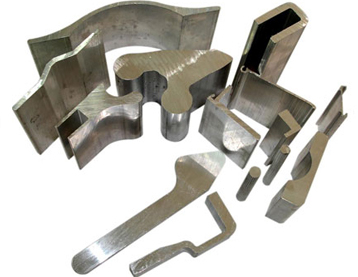
AZ-series alloys offer a balance many industries need, and they stay light while delivering dependable strength. AZ31 and AZ61 support parts that must reduce mass without losing structural stability, so engineers use them in interior frames, tool bodies, and lightweight brackets. The ratio helps designers remove unnecessary weight, and it keeps products comfortable to carry or operate. These alloys stay consistent under moderate loads, and they give teams a predictable base for everyday components.
AZ-series alloys use aluminum and zinc as their core elements, and these metals remain affordable for large-scale production. Rare-earth alloys such as AE44 offer strong performance, but they cost far more due to expensive elements and supply limits. Many factories choose AZ31 or AZ61 because the alloying cost stays stable even as volume increases. This cost structure helps brands launch high-volume items such as tool housings or luggage frames without exceeding budget targets.
AZ-series alloys work across a wide range of processes, and this flexibility supports efficient factory flow. They machine smoothly, so CNC teams finish parts quickly without excessive tool wear. They also support extrusion, so companies create long, uniform profiles for structural designs. Many operations use AZ31 for sheet forming because it bends predictably, and it keeps defects low during production. Casting lines also rely on AZ-series alloys for medium-complexity shapes when they need a clean surface and stable solidification.
Many automotive suppliers trust AZ-series alloys because they hold shape under vibration, heat shifts, and years of everyday use. AZ31 appears widely in seat frames and steering components, and it maintains structural integrity through long service cycles. Consumer brands also depend on these alloys for travel cases, electronic housings, and mechanical handles. Products stay strong even after repeated stress, and they remain light enough for portable designs. This long record of real-world testing helps manufacturers rely on AZ-series materials when they need predictable, repeatable performance.
Benefit Category | AZ-Series Advantage | Impact on Production |
Strength-to-Weight | Light but stable | Easier product handling |
Cost | Affordable Al + Zn alloying | Lower material expense |
Manufacturing | Works in machining, extrusion, forming | Flexible production routes |
Reliability | Proven in cars and consumer goods | Long service life |
Each Magnesium Alloy family brings a different mix of strength and ductility, and engineers select them based on real load requirements. AZ31 stays light and flexible, so it works well in parts that need moderate durability and easy forming. AZ61 raises strength, and it supports higher stress without major deformation. AZ91 delivers strong castability and balanced mechanical behavior, and it suits heavier housings. AM60 stands out for impact resistance, and it absorbs force without cracking during drops or vibration. All four alloys keep very low density, and they help teams reduce weight across many product lines.
These alloys behave differently on the factory floor. AZ31 offers smooth machining and steady formability, and many teams use it for rolled sheet or extruded profiles. AZ61 machines well too, but it forms less easily, so factories rely on machining for its final shape. AZ91 fits high-volume die-casting, and it fills complex molds quickly while keeping surface quality high. AM60 supports casting and limited forming, and it performs well when parts need impact strength more than fine detailing. Many plants run multiple alloys depending on product category, and these four cover nearly every mainstream requirement.
Costs shift based on alloy composition, and the AZ-series remains the most affordable. AZ31 typically ranks lowest, and it offers the widest availability due to heavy industry demand. AZ61 costs slightly more because it uses more aluminum, but the price still fits large-scale projects. AZ91 stays competitive in casting operations, and its large market volume keeps supply steady. AM60 costs more than AZ31 and AZ91, and some factories use it only for safety parts or impact-heavy gear. All four remain easier to source than rare-earth alloys, and they help brands control production budgets.
AZ31 supports interior automotive structures, tool handles, and suitcase frames, and it keeps these products light. AZ61 fits high-stress components such as brackets or mechanical supports. AZ91 shines in die-cast housings used in electronics, small machinery, and automotive covers. AM60 excels in safety components, tool bodies, and impact-resistant shells, and it protects users or equipment from shocks. Many consumer and industrial products rely on these alloys every day.
Alloy | Strength | Ductility | Best Manufacturing Route | Cost Level | Ideal Product Types |
AZ31 | Medium | High | Machining, extrusion, forming | Low | Lightweight frames, tool handles |
AZ61 | High | Medium | Machining, extrusion | Low–Medium | Brackets, pedals, structural inserts |
AZ91 | Medium–High | Medium | Die-casting | Medium | Housings, covers, electronics shells |
AM60 | Medium | High impact resistance | Casting, limited forming | Medium–High | Safety parts, tool bodies |
Tip: When choosing between these alloys, start by defining load level, impact behavior, and your preferred manufacturing process. These three factors usually point directly to the right material choice.
AZ31 is the most common alloy because it stays light and machines well. AZ61 follows for higher strength, and AZ91 or AM60 support special needs. Many industries trust these alloys for stable and affordable performance. Alumag uses these materials to create durable products, and its services help teams choose alloys that improve product design.
A: The most common Magnesium Alloy is AZ31, known for its low weight, good machinability, and stable cost.
A: AZ31 offers a strong strength-to-weight balance, and this Magnesium Alloy fits most general applications.
A: AZ61 is a stronger Magnesium Alloy, but AZ31 is easier to form and cheaper for large-scale production.
A: This Magnesium Alloy appears in automotive parts, consumer products, and lightweight structures.
A: Yes, AZ31 keeps costs low while maintaining reliable performance across different industries.