Tel:+86-512-53640771-125 E-mail: export@alumag.com.cn
- All
- Product Name
- Product Keyword
- Product Model
- Product Summary
- Product Description
- Multi Field Search

Views: 0 Author: Site Editor Publish Time: 2025-12-19 Origin: Site


Aluminum extrusion profiles are key components in a wide array of industries. They offer durability, strength, and flexibility in design, making them ideal for applications ranging from construction and automotive to renewable energy and electronics. The extrusion process involves forcing heated aluminum through a die to create specific shapes, ensuring a versatile solution for structural and functional components.
In this article, we will explore the definition of aluminum extrusion profiles, how they are created, and why they are essential in various industries. You will learn about their features, applications, and the factors to consider when selecting the right profiles for your project.
Aluminum extrusion is a manufacturing technique in which heated aluminum billets are forced through a mold or die to create profiles with specific shapes. The process allows manufacturers to produce profiles in a wide range of designs, from simple shapes like angles and channels to more intricate, custom profiles. By altering the die, the final shape can be customized for various applications, making aluminum extrusion incredibly versatile.
The primary advantage of the aluminum extrusion process is its ability to produce parts with uniform cross-sections, precise dimensions, and excellent strength-to-weight ratios. This is particularly useful for industries where weight reduction is essential without compromising durability, such as automotive, aerospace, and construction.
Precision: Extrusion produces consistent profiles with exact dimensions.
Strength-to-Weight Ratio: Lightweight yet strong, ideal for high-performance applications.
Versatility: Ability to create complex, custom designs based on specific needs.
The aluminum extrusion process starts with preparing aluminum billets, which are solid blocks of aluminum. These billets are preheated to temperatures between 350°C and 500°C. This heating makes the metal malleable and easier to push through the extrusion press. By preheating the billets, the material becomes soft enough to flow through the die while retaining its structural integrity.
The billet is then placed into an extrusion press, a machine that applies high pressure to force the heated aluminum through the die. The die shape determines the profile of the aluminum, giving manufacturers the flexibility to produce profiles of various shapes, sizes, and complexity.
Once the aluminum is pushed through the die, it exits as a continuous length of the desired profile. As the aluminum comes out of the die, it is still hot and soft. Therefore, cooling is an essential step in the process. The profiles are cooled using air or water, which stabilizes the metal and ensures that the profile retains its shape.
● Air Cooling: Used for smaller profiles or where speed is important.
● Water Cooling: Typically used for larger or more complex profiles to ensure proper cooling without warping.
Post-Extrusion Process | Description | Benefits |
Anodizing | A process that adds a protective oxide layer to the aluminum surface. | Increases durability and corrosion resistance, enhancing the aesthetic finish. |
Powder Coating | Applies a layer of colored powder to the aluminum profile. | Provides protection against corrosion and improves visual appeal. |
Machining | Includes additional processes like drilling, tapping, or milling. | Customizes profiles for specific applications, adding functionality. |
This table highlights the key post-extrusion treatments that enhance the functionality, durability, and aesthetic appeal of aluminum profiles.
One of the standout features of aluminum extrusion profiles is their excellent strength-to-weight ratio. Aluminum is lighter than many other metals, such as steel, making it ideal for applications where reducing weight is important without compromising strength. This is particularly beneficial in the automotive, aerospace, and transportation industries, where weight reduction leads to improved fuel efficiency and lower emissions.
Aluminum’s lightweight nature and durability allow it to be used in a variety of high-stress applications. Whether used in structural supports or framing for buildings, vehicles, or machinery, aluminum profiles provide the necessary strength without the added weight of other metals.
Aluminum naturally resists corrosion due to the formation of a protective oxide layer on its surface. This resistance makes aluminum profiles an excellent choice for outdoor and harsh environment applications, where other metals might rust or degrade. For added protection, aluminum profiles can undergo surface treatments like anodizing, which further enhances their resistance to weathering and chemicals.
The aluminum extrusion process offers remarkable flexibility in design. Custom dies can be created to produce unique profiles tailored to specific applications, allowing manufacturers to create profiles with different cross-sections, shapes, and sizes. Whether it's a standard profile like a channel or a custom design for a particular architectural feature, aluminum extrusion enables high levels of creativity in design.
Aluminum extrusion profiles are not limited to basic shapes; they can be designed for intricate, complex geometries that provide both aesthetic appeal and functional benefits. Additionally, the ability to modify and customize these profiles allows for better integration into specific applications.
Aluminum extrusion profiles are widely used across various industries due to their strength, lightweight properties, and resistance to corrosion. These profiles are versatile and find applications in automotive, construction, aerospace, and electronics. Their adaptability makes them a preferred choice for both functional and aesthetic uses, providing the necessary support and design flexibility in diverse sectors.
In the automotive sector, aluminum extrusion profiles play a vital role in the design and manufacturing of vehicle frames, body components, and chassis. Their lightweight nature helps reduce the overall weight of vehicles, which is crucial for improving fuel efficiency and reducing carbon emissions. This weight reduction makes aluminum a preferred material in the automotive industry as manufacturers focus on sustainability and energy efficiency.
Weight Reduction: Improves fuel efficiency and reduces emissions.
Strength and Safety: Offers excellent strength for crash protection and durability.
Corrosion Resistance: Aluminum profiles resist corrosion, ensuring long-lasting performance even in harsh conditions.
Aluminum extrusion profiles are commonly used in the construction and architectural industries for applications such as window and door frames, curtain walls, and structural supports. Aluminum’s natural resistance to corrosion and weathering makes it ideal for outdoor applications. Its lightweight yet sturdy nature makes it easy to handle and install in various building designs.
● Durability: Withstands outdoor weather conditions and resists corrosion.
● Design Flexibility: Aluminum profiles can be customized into complex shapes for creative architectural solutions.
● Energy Efficiency: Contributes to energy-efficient building designs, especially in terms of thermal insulation.
In the electronics and electrical industries, aluminum extrusion profiles are essential for heat management and structural support. Aluminum’s excellent thermal conductivity allows it to be used in heat sinks, enclosures, and frames, providing effective heat dissipation for electronic components. This helps prevent overheating, improving the performance and longevity of electronic devices such as computers, LED lighting, and communication equipment.
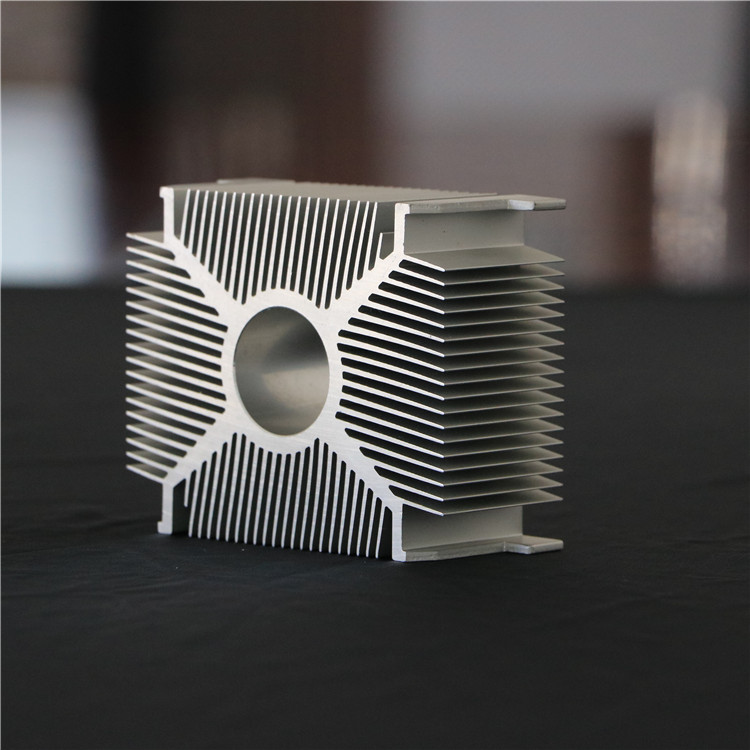
Thermal Management: Aluminum profiles are ideal for heat sinks, helping to cool electronic devices and prevent overheating.
Structural Support: Provides strong, lightweight enclosures for sensitive electronic components.
Enhanced Durability: Withstands environmental stresses, ensuring the longevity of electrical components.
Aluminum extrusion profiles are critical in the aerospace industry due to their high strength-to-weight ratio, corrosion resistance, and design flexibility. These profiles are used in aircraft frames, wings, and interior components. The aerospace sector demands materials that can withstand extreme conditions while maintaining structural integrity, and aluminum’s combination of lightness and strength makes it the perfect choice for such applications.
Lightweight: Reduces overall aircraft weight, improving fuel efficiency and performance.
Strength and Durability: Offers the necessary structural integrity for critical aerospace components.
Corrosion Resistance: Essential for parts exposed to harsh environments, including extreme temperatures and chemicals.
In the renewable energy sector, aluminum extrusion profiles are frequently used for mounting systems, framing for solar panels, and wind turbine components. The material's strength and resistance to weathering make it an ideal choice for supporting energy systems exposed to outdoor conditions.
Weather Resistance: Ensures longevity in outdoor, high-stress environments.
Lightweight but Strong: Ideal for supporting large solar panels without adding excessive weight.
Corrosion Resistance: Protects components from degradation in harsh weather conditions.
In addition to industrial uses, aluminum extrusion profiles are also widely used in consumer products. Their lightweight, corrosion-resistant, and customizable features make them ideal for products where both strength and appearance matter.
Aluminum profiles are commonly used in modern furniture design, offering durability and a sleek, contemporary look. Extruded aluminum is used for framing, shelving, and decorative elements, enhancing the aesthetic appeal of furniture pieces while maintaining functional strength.
The renewable energy sector benefits greatly from aluminum extrusion profiles, especially for solar panel frames and mounting systems. Aluminum’s resistance to corrosion and its ability to withstand the elements make it an ideal choice for outdoor solar installations that must endure harsh environmental conditions.
Standard aluminum profiles are pre-designed shapes available in various sizes. These profiles are produced in large quantities and are widely available in product catalogs. Examples include channels, angles, tubes, and flat bars. Standard profiles are typically used for general applications in construction, furniture, and manufacturing.
Readily available with a fast turnaround time.
Lower cost due to mass production.
Suitable for general applications that do not require specialized designs.
Custom aluminum profiles are designed to meet the specific needs of a project. They can have unique cross-sections, thicknesses, or additional features tailored to specialized applications. Custom profiles are commonly used in industries like aerospace, automotive, and high-end furniture, where standard profiles may not suffice.
Tailored designs for unique project requirements.
Provides flexibility for specialized performance criteria (e.g., load-bearing capacity, heat resistance).
Ideal for proprietary products or custom applications.
Selecting the right aluminum profile depends on the application’s load-bearing requirements. For structural applications like support beams or frames, the strength of the aluminum profile is a critical factor. Profiles like I-beams and hollow sections are designed specifically for load-bearing applications and are ideal for heavy-duty use.
Ensure the profile’s strength matches the load it will bear.
Structural profiles like I-beams or box sections provide higher strength-to-weight ratios.
Aluminum’s ability to withstand environmental stressors like humidity, temperature fluctuations, and corrosive elements makes it ideal for outdoor and industrial use. Additionally, aesthetic considerations may play a role, especially in architectural applications, where aluminum profiles need to complement the design.
Aluminum profiles are perfect for outdoor use, resistant to corrosion and harsh weather conditions.
Additional surface treatments (like anodizing or powder coating) enhance durability and aesthetics.
Aluminum extrusion profiles are crucial in many industries due to their strength, lightweight properties, and design versatility. The extrusion process allows these profiles to be produced in various shapes, ideal for automotive, construction, electronics, and renewable energy applications. Whether opting for custom or standard profiles, aluminum offers both flexibility and durability.
When selecting aluminum profiles for your project, consider factors such as strength, environmental resistance, and aesthetics. Alumag Aluminum Tech (Taicang) Co., Ltd. offers high-quality aluminum profiles that provide excellent value through innovative solutions and superior performance. With advancements in extrusion technology, aluminum profiles will continue to enhance various industries.
A: Aluminum extrusion profiles are formed by forcing heated aluminum through a die to create custom shapes.
A: The aluminum extrusion process involves heating billets and pushing them through a mold to form specific profiles.
A: Aluminum extrusion profiles offer strength, lightweight properties, and corrosion resistance, making them ideal for construction applications.
A: Aluminum extrusion profiles are durable, customizable, lightweight, and resistant to corrosion, making them versatile for various industries.
A: Standard aluminum profiles are mass-produced, while custom profiles are tailored to specific project needs or designs.
A: In automotive applications, aluminum extrusion profiles reduce vehicle weight, improving fuel efficiency and performance.