Tel:+86-512-53640771-125 E-mail: export@alumag.com.cn
- All
- Product Name
- Product Keyword
- Product Model
- Product Summary
- Product Description
- Multi Field Search

Views: 366 Author: Site Editor Publish Time: 2026-02-09 Origin: Site


7000 series aluminum is a group of high-strength aluminum alloys mainly alloyed with zinc, and in many grades also combined with magnesium and copper. Within the overall Aluminum Material classification system, it represents one of the highest strength levels available for commercial and industrial use.
Unlike general-purpose aluminum materials that are selected mainly for corrosion resistance or appearance, 7000 series aluminum is primarily selected for performance-driven applications, especially where high mechanical loads and lightweight design are required.
The value of 7000 series aluminum does not lie in decorative performance or easy fabrication, but in its ability to carry high loads while maintaining low weight.
In real engineering projects, this aluminum material is usually chosen only when standard aluminum alloys cannot meet strength or fatigue requirements.
In other words, 7000 series aluminum is a typical application-oriented material. Engineers normally select it after evaluating load conditions, service environment and long-term reliability targets.
In international projects, application requirements are usually connected directly with material standards.
Many 7000 series aluminum products are specified according to standards issued by
ASTM International, which define chemical composition, mechanical performance and delivery conditions for different product forms.
These ASTM Aluminum Material standards ensure that aluminum supplied for critical applications such as transportation equipment, industrial machinery or aerospace structures can meet stable and verifiable performance requirements.
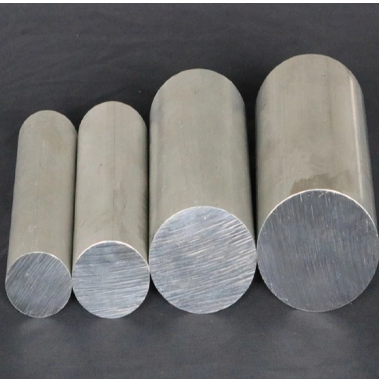
The most important reason 7000 series aluminum is widely used in high-end applications is its very high strength level. After proper heat treatment, its tensile and yield strength are far higher than common Aluminum Material such as 5000 or 6000 series alloys.
At the same time, it offers a very favorable strength-to-weight ratio, making it especially suitable for lightweight structural systems, moving components and load-bearing mechanical parts.
Although 7000 series aluminum is extremely strong, it also has clear limitations.
Its weldability is relatively poor, and some grades are sensitive to corrosion and stress corrosion cracking when used in aggressive environments.
Because of these characteristics, it is rarely selected for large welded structures or highly corrosive service environments. Application suitability must always be evaluated together with environmental and manufacturing factors.
From an application perspective, 7000 series aluminum is positioned above 6000 series aluminum material in terms of structural performance, while 5000 series aluminum is usually selected when corrosion resistance and formability are more important than strength.
As a result, 7000 series aluminum is typically reserved for high-performance applications where mechanical reliability is the primary design objective.
In aerospace structures, reducing weight while maintaining structural strength is one of the most critical design targets.
7000 series aluminum is therefore widely used in aircraft structural components, supporting parts and high-load assemblies where high fatigue resistance and high strength are required.
In high-performance vehicles and special transportation equipment, 7000 series aluminum is commonly used for structural brackets, suspension components and load-bearing connectors.
Its high strength allows designers to reduce section size and overall vehicle weight without sacrificing structural safety.
Modern industrial machinery, robotics and automated production lines require lightweight but rigid structural parts.
7000 series aluminum is frequently applied to mechanical supports, mounting blocks and motion-system components where both strength and dimensional stability are essential.
High-end sports equipment, especially performance bicycles and lightweight structural accessories, often uses 7000 series aluminum to achieve a balance between stiffness, strength and weight reduction.
In practical engineering, 7000 series aluminum is widely used for frames, brackets, connectors and reinforced joints.
These parts are normally subjected to high static or cyclic loads and require reliable long-term strength.
Compared with common aluminum materials such as 6061 or 6063, 7000 series aluminum provides a much larger strength margin.
This allows designers to use thinner sections, reduce overall structure mass and improve mechanical efficiency.
When using 7000 series aluminum for load-bearing structures, designers must carefully control stress concentration, corner radii and joint geometry.
Proper structural design is essential to fully utilize the high strength of this aluminum material while avoiding fatigue and local failure risks.
Another important application field of 7000 series aluminum is precision machining.
Despite its high strength, it maintains good machinability and produces stable cutting behavior, which makes it suitable for complex CNC machined parts.
In real projects, this aluminum material is commonly used to manufacture housings, mounting blocks, adapters, connectors and high-load mechanical interfaces.
These parts usually require both high dimensional accuracy and high structural strength.
Compared with softer aluminum materials, 7000 series aluminum offers better dimensional stability for high-load parts, especially when parts are subjected to repeated mechanical stress during operation.
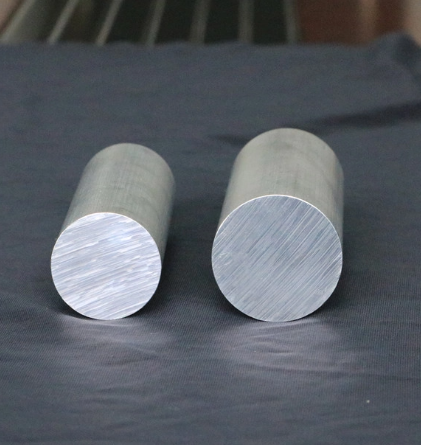
7000 series aluminum is increasingly used for customized extruded profiles that form the main load-bearing framework of industrial equipment and mechanical systems.
Such profiles are designed to integrate multiple functional features while maintaining high stiffness and strength.
In automation systems and special mechanical assemblies, extruded profiles made from 7000 series aluminum are used for guide supports, reinforcement elements and motion-system structures where deformation control is critical.
Because of its alloy characteristics, 7000 series aluminum is more sensitive to extrusion process parameters.
Wall thickness distribution, profile complexity and die design must be carefully optimized to ensure stable quality.
7000 series aluminum tubes and seamless pipes are often used in lightweight frames, support arms and structural connectors where high bending and torsional strength are required.
In mechanical assemblies, seamless tubes made from this aluminum material are applied in high-strength internal components and supporting elements that require accurate dimensions and reliable load capacity.
Compared with tubes produced from standard aluminum material, 7000 series aluminum tubes are mainly selected for their mechanical performance rather than for decorative or corrosion-resistant purposes.
7000 series aluminum plates are widely used in load-bearing panels and structural plates where both stiffness and strength are required.
Thick plates are commonly used as raw material for machining heavy-duty components, base plates and structural adapters that must maintain high mechanical reliability during long-term service.
Thin sheets are usually applied to lightweight structural skins, while thick plates are more suitable for heavy machined parts and critical structural components.
In aerospace manufacturing, 7000 series aluminum is widely used for structural brackets, frames and reinforced elements that must withstand long-term cyclic loads and strict safety requirements.
These applications require strict control of fatigue behavior, fracture toughness and dimensional stability.
Material selection is closely linked with certified Aluminum Material specifications and controlled heat treatment conditions.
For safety-critical sectors such as aerospace, compliance with recognized ASTM Aluminum Material standards is essential to ensure material traceability, consistency and long-term reliability.
In motorsport and performance vehicle projects, 7000 series aluminum is often applied to suspension arms, hubs and high-load connectors.
These parts require extremely high stiffness and strength while keeping vehicle weight as low as possible.
High-strength brackets and connectors manufactured from 7000 series aluminum are widely used in performance vehicles to support powertrain, steering and suspension systems.
Compared with 6000 series aluminum material, 7000 series aluminum provides a much higher strength margin, which allows designers to reduce section size and improve structural efficiency under extreme operating conditions.
In advanced manufacturing systems, such as industrial robots and automated production lines, 7000 series aluminum is frequently used for load-bearing brackets, arm supports, joint structures and motion system components.
These parts must combine high stiffness with low inertia. Compared with conventional Aluminum Material, 7000 series aluminum allows designers to reduce cross-section size while maintaining sufficient rigidity, which directly improves motion accuracy and dynamic response of automated equipment.
Many moving components in industrial equipment are subjected to repeated acceleration, vibration and alternating loads.
7000 series aluminum is therefore often selected for sliders, carriers, support blocks and reinforced connectors where both fatigue resistance and dimensional stability are critical.
For industrial applications, the main concern is not only initial strength but also long-term stability.
When properly selected and heat treated, 7000 series aluminum can maintain stable mechanical performance under continuous cyclic loading, making it suitable for long-service industrial systems.
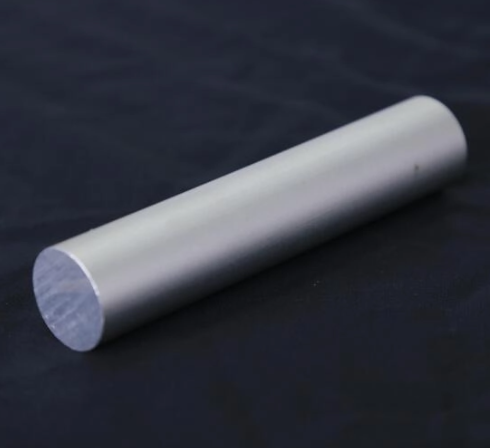
Bars and rods made from 7000 series aluminum are mainly used as raw material for precision machining.
They are widely applied to manufacture adapters, shafts, connectors, housings and structural interfaces that require high load capacity.
Because this aluminum material offers good machinability together with high strength, it is especially suitable for customized mechanical components.
Extruded profiles made from 7000 series aluminum are commonly used in customized structural systems, such as equipment frames, reinforcement profiles and integrated mechanical supports.
Unlike standard Aluminum Material profiles that focus on appearance and surface quality, these profiles are primarily designed for load-bearing and stiffness control.
7000 series aluminum tubes and seamless pipes are applied to lightweight structural arms, support columns and internal mechanical elements that must withstand bending and torsional loads.
Plates and thick plates are widely used as base material for high-strength machined plates, structural mounting panels and heavy-duty connection parts.
Some grades within the 7000 series are mainly selected for applications where maximum strength is the primary requirement.
These grades are typically used in aerospace structures, performance vehicle components and high-load industrial parts.
Certain grades offer a better balance between strength, corrosion resistance and toughness.
They are often used in transportation equipment, industrial machinery and customized structural profiles.
For applications where environmental conditions are more demanding, corrosion-optimized 7000 series grades are selected to reduce the risk of stress corrosion cracking while maintaining high structural performance.
The T6 temper is widely used when the main design target is maximum mechanical strength.
Typical applications include high-load brackets, structural connectors and precision machined components.
For applications exposed to higher humidity or long-term static stress, T73 and T74 tempers are often preferred.
Although their strength is slightly lower than T6, they provide significantly improved resistance to stress corrosion cracking.
In real projects, temper selection directly influences not only strength but also long-term reliability.
For this reason, temper condition is considered as important as the alloy grade itself when defining application suitability.
Most applications of 7000 series aluminum are located in controlled indoor environments, such as factories, workshops and automated production lines.
In these conditions, its high strength and fatigue performance can be fully utilized.
In outdoor structures and semi-corrosive environments, 7000 series aluminum can still be used, but alloy and temper selection must be carefully controlled.
Surface protection is usually recommended to improve durability.
In high-humidity or marine-influenced environments, this aluminum material is generally used with caution.
Additional corrosion protection and conservative design margins are necessary to ensure long-term performance.
Structures that rely heavily on welding for assembly are not suitable for 7000 series aluminum.
The alloy’s sensitivity to welding heat input and strength loss in the heat-affected zone limits its use in large welded frames.
For chemical processing equipment or extremely aggressive environments, other aluminum materials or alternative alloys are usually more appropriate.
7000 series aluminum is not designed for electrical conductors or heat-transfer systems, where conductivity rather than strength is the main requirement.
In professional engineering projects, application requirements must be supported by standardized material specifications.
This ensures that mechanical performance, chemical composition and delivery conditions are consistent and verifiable.
For many international projects, 7000 series aluminum products are supplied in accordance with ASTM Aluminum Material standards.
These standards define acceptable grades, tempers and property limits for different product forms, allowing designers to link real applications with reliable material performance.
Using standardized Aluminum Material specifications helps engineers avoid performance uncertainty and simplifies technical communication between designers, manufacturers and suppliers.
Applications involving high loads or fatigue demand strict control of tensile strength, yield strength and elongation.
For structural assemblies and precision machinery, dimensional tolerance and straightness are often more critical than for decorative aluminum products.
Surface condition directly affects fatigue performance and coating quality, especially for high-stress components.
For aerospace, transportation and high-risk industrial applications, traceability of material batches and heat treatment records is commonly required.
Engineers first evaluate operating loads, dynamic behavior and safety margins.
Only when standard Aluminum Material cannot meet the required strength level is 7000 series aluminum normally introduced.
The service environment is carefully analyzed to determine whether corrosion-optimized grades or special tempers are necessary.
The intended manufacturing route—such as extrusion, plate machining or tube processing—plays a major role in determining feasibility and cost.
Although 7000 series aluminum offers outstanding performance, it is typically selected only when its benefits justify its higher processing and material cost.
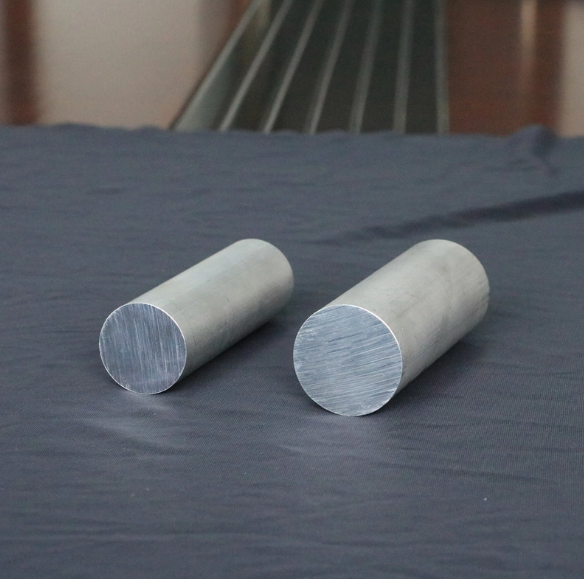
Lightweight design remains a key driver in transportation equipment, automation systems and high-performance machinery.
This trend continues to expand the application scope of 7000 series aluminum.
More manufacturers are adopting customized high-strength extruded profiles instead of assembling multiple standard components, which increases demand for application-specific 7000 series aluminum extrusions.
With higher performance requirements and tighter design margins, demand for advanced Aluminum Material such as the 7000 series continues to grow in high-end engineering fields.
It is mainly used for high-strength structural parts, precision machined components, customized extruded profiles and load-bearing mechanical systems where lightweight design is critical.
Yes.
It is widely used for structural frames and reinforcement components, provided that welding is minimized and proper alloy and temper selections are applied.
It can be used outdoors, but corrosion risk must be carefully evaluated and suitable surface protection is normally required.
Yes.
It is one of the most popular high-strength aluminum materials for CNC machined parts due to its good machinability and dimensional stability.
For many international and safety-critical projects, compliance with ASTM Aluminum Material standards is strongly recommended to ensure consistent quality and reliable performance.
7000 series aluminum is mainly used in aerospace structures, performance vehicles, industrial automation equipment, high-load mechanical systems and precision machined components.
It is the best choice when mechanical performance and lightweight design are the primary objectives, and when manufacturing routes can avoid extensive welding.
For engineers and buyers working on international projects, selecting suitable 7000 series aluminum grades and tempers in accordance with ASTM Aluminum Material standards is essential to ensure that application performance, quality consistency and long-term reliability can be achieved.
As a professional customized aluminum extrusion manufacturer, Alumag Group has focused on high-strength aluminum and magnesium alloy products since 1994. The company provides one-stop solutions for 7000 series aluminum, including extrusion, heat treatment and CNC machining. With experienced engineers and strict quality control, Alumag supports global customers with reliable products and technical assistance in accordance with recognized ASTM Aluminum Material requirements.