Tel:+86-512-53640771-125 E-mail: export@alumag.com.cn
- All
- Product Name
- Product Keyword
- Product Model
- Product Summary
- Product Description
- Multi Field Search


Heat sinks are vital components used in many industries, especially electronics and automotive, to prevent overheating. They dissipate excess heat from electronic devices, ensuring optimal performance and longevity. Without proper thermal management, devices can suffer damage and reduced efficiency.
In this article, we will explore what heat sinks do, how they work, and the different types available. You will also learn about the materials used and their applications in various industries.
A heat sink is a passive heat exchanger that absorbs heat from a device and disperses it into the surrounding environment. Typically made of materials with high thermal conductivity (such as aluminum or copper), heat sinks are designed to increase the surface area available for heat dissipation. By doing so, they prevent the overheating of critical components, ensuring reliable and efficient performance.
Increased Surface Area: More surface area allows for better heat transfer.
Material Choice: Materials like aluminum and copper are used for their excellent thermal conductivity.
Passive Cooling: Most heat sinks don’t require external power, making them energy-efficient.
Heat sinks function through two primary processes: conduction and convection. When a device, such as a CPU, generates heat, the heat sink absorbs it through conduction. Once the heat is transferred to the heat sink, it is dissipated into the surrounding air via convection.
Conduction: Heat moves from the hot component (e.g., CPU or power transistor) to the heat sink through direct contact.
Convection: The heat sink's increased surface area facilitates the transfer of heat to the air around it. In some systems, fans are used to force more air across the heat sink, speeding up the convection process.
Passive Heat Sinks: Rely on natural convection to cool components.
Active Heat Sinks: Incorporate fans or liquid cooling to increase airflow, improving heat dissipation.
Heat sinks are crucial components in the electronics industry, particularly for cooling high-performance components such as CPUs, GPUs, and power supplies. These components generate significant amounts of heat during operation, and without proper heat management, excessive heat can lead to performance degradation or component failure. By integrating heat sinks, manufacturers can effectively manage thermal loads, ensuring that devices operate at peak performance levels while preventing overheating issues that might compromise their functionality or longevity.
In modern computing, CPUs (Central Processing Units) and GPUs (Graphics Processing Units) are central to performance. As these components handle high volumes of computational tasks, they generate considerable amounts of heat. Effective thermal management is critical to avoid issues like thermal throttling, where the processor reduces its speed to prevent overheating. Heat sinks, both passive (using natural convection) and active (incorporating fans or liquid cooling), are widely used to cool CPUs and GPUs, ensuring that they function optimally even during intense tasks.
Preventing Overheating: Heat sinks help dissipate heat, preventing the processor from throttling or shutting down due to excessive heat.
Ensuring Longevity: By effectively managing heat, heat sinks extend the lifespan of components, preventing premature failure due to overheating.
Power supplies in electronic systems, particularly in high-performance equipment, can generate a substantial amount of heat during operation. If the temperature is not controlled, it can lead to system instability, inefficiency, or potential component failure. Heat sinks are essential for dissipating this heat, ensuring that power supplies maintain their efficiency and operate reliably over time.
Temperature Regulation: Heat sinks prevent power units from overheating, ensuring steady and stable operation during extended use.
Enhancing Efficiency: Proper heat dissipation helps maintain steady power output and reduces the risk of thermal damage to sensitive electronic components.
Heat sinks are also integral to the automotive and industrial sectors, where they play a critical role in thermal management, especially in electric vehicles (EVs) and heavy industrial machinery. Effective heat dissipation is essential to maintain system performance, safety, and longevity, particularly when dealing with high-power devices or environments prone to high temperatures.
In electric vehicles, managing the temperature of batteries is vital for both performance and safety. During the charging and discharging cycles, batteries generate heat, which can reduce efficiency, shorten battery life, and, in extreme cases, cause dangerous conditions such as thermal runaway. Heat sinks are used in battery cooling systems to maintain optimal temperature levels, ensuring that the vehicle operates safely and efficiently.
Battery Cooling: Heat sinks are used to ensure that EV batteries remain at safe temperatures, preventing overheating during charging or discharging.
Efficiency: Effective cooling helps extend the lifespan of batteries, maintaining their performance over extended periods of use.
In industrial machinery, heat sinks are used to manage the significant heat generated by high-power systems, motors, and components. Machines operating at high speeds or under heavy loads generate considerable heat, which can compromise their performance and cause premature failure. Heat sinks help keep these systems at stable temperatures, preventing overheating and ensuring smooth, efficient operation.
Heat Dissipation: Heat sinks are designed to ensure that high-power systems in industrial settings stay within safe operating temperatures, preventing overheating.
Optimal Performance: By maintaining temperature stability, heat sinks help optimize machinery performance and reduce downtime caused by heat-related issues.
Heat sinks are essential components for managing heat in various devices, from electronics to industrial systems. They prevent overheating, maintain performance, and extend the lifespan of components. Heat sinks come in different types—passive, active, and hybrid—and are made from materials like aluminum and copper to optimize heat dissipation. They are widely used in applications like CPUs, GPUs, power supplies, electric vehicles, and industrial machinery.
When selecting a heat sink for your project, consider the application’s heat dissipation requirements, the available space, and the environmental conditions. Aluminum heat sinks are cost-effective for general applications, while copper heat sinks are best for high-performance systems. Hybrid systems offer flexibility for devices with varying thermal needs.
As technology continues to advance, innovations in heat sink designs, materials, and manufacturing processes will improve the efficiency and sustainability of cooling solutions. With rising power demands and increasingly complex devices, heat sinks will continue to be essential in preventing overheating and maintaining the performance of electronic and mechanical systems.
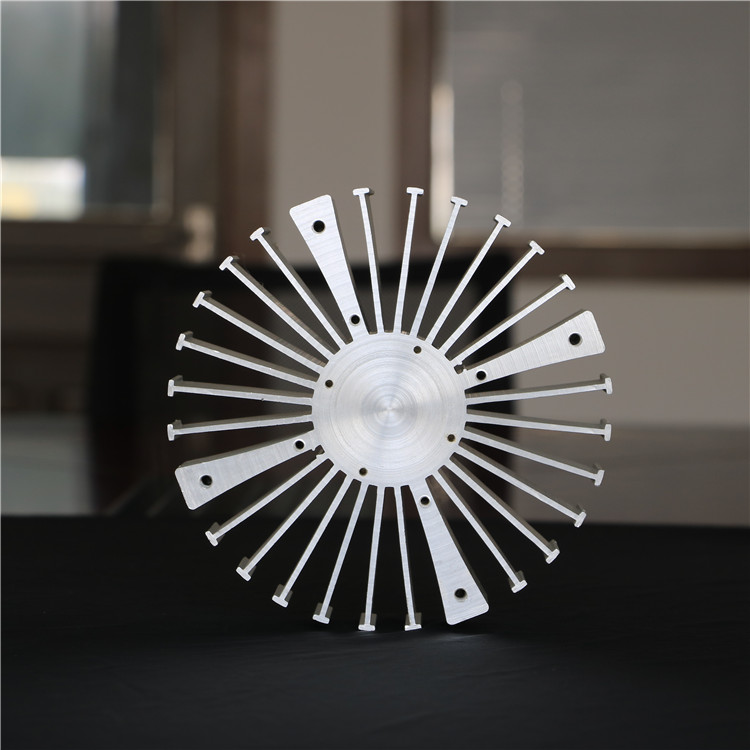
Passive heat sinks are the simplest form of heat dissipation. These rely solely on natural convection to remove heat from the component. Passive heat sinks are typically made from aluminum due to its low cost and good thermal conductivity. These are ideal for low-power electronics where active cooling is unnecessary.
● No External Power: Works without the need for fans or pumps.
● Cost-Effective: Generally cheaper than active cooling solutions.
● Applications: Suitable for small, low-power devices, such as mobile phones and smaller electronics.
Active heat sinks incorporate external components like fans, pumps, or even liquid cooling systems to enhance the heat dissipation process. These systems are often used in high-performance or high-power applications, such as gaming PCs, automotive applications, and industrial machinery, where the heat generated is too much for passive cooling to handle.
● Improved Cooling: Uses fans or liquid to speed up heat transfer.
● More Effective: Ideal for high-performance electronics and machinery.
● Applications: Computers, servers, and larger-scale electronics.
Hybrid heat sinks combine both passive and active heat dissipation methods. In these systems, the heat sink starts by using passive cooling and switches to active cooling (e.g., a fan) when the temperature exceeds a certain threshold. This allows the system to balance energy consumption and cooling efficiency.
● Dual Cooling: Combines the benefits of both passive and active cooling.
● Efficient: Uses passive cooling until active cooling is necessary.
● Applications: Useful in systems with variable heat loads.
The material used to construct heat sinks plays a significant role in their thermal conductivity and effectiveness. Two of the most common materials for heat sinks are aluminum and copper.
Material | Thermal Conductivity | Weight | Cost | Best Use |
Aluminum | Good | Light | Low | Low to medium power electronics, cost-effective solutions |
Copper | Excellent | Heavy | High | High-performance systems requiring maximum heat dissipation |
Aluminum is the most widely used material for heat sinks due to its lightweight nature and excellent thermal conductivity. It is also cost-effective, making it ideal for most commercial applications. Aluminum heat sinks are available in various shapes and sizes, with fins or other designs to increase surface area.
Lightweight: Easier to handle and install.
Cost-Effective: Generally more affordable than copper.
Good Thermal Conductivity: Suitable for most general applications.
Copper has superior thermal conductivity compared to aluminum, meaning it can dissipate heat more efficiently. However, copper is much heavier and more expensive. Copper heat sinks are often used in high-performance applications, such as in servers, high-end gaming computers, and power electronics, where maximum heat dissipation is required.
Superior Heat Dissipation: Best for high-performance systems.
More Durable: Copper is more robust than aluminum.
Effective for High-Power Devices: Often used for larger or high-end devices where heat generation is significant.
Heat sinks are essential for managing heat and ensuring system efficiency. They come in passive, active, and hybrid types, using materials like aluminum and copper for different performance needs. Choosing the right heat sink ensures that your devices stay cool and operate efficiently.
For most applications, aluminum heat sinks are affordable and effective, while copper is ideal for high-performance systems. Hybrid systems are useful for varying cooling requirements.
Looking ahead, heat sink technology will continue to improve. Innovations in design and materials will enhance their efficiency.
Alumag Aluminum Tech (Taicang) Co., Ltd. provides high-quality aluminum heat sinks that offer excellent cooling solutions. Their products ensure optimal performance across a variety of industries.
A: Heat sinks help dissipate heat from electronic components, preventing overheating and improving device performance and longevity.
A: Heat sinks absorb heat through conduction and dissipate it via convection, ensuring devices stay within safe temperature ranges.
A: Heat sinks prevent components from overheating, which could lead to performance degradation or damage, ensuring reliability.
A: Heat sinks are typically made of materials like aluminum and copper due to their excellent thermal conductivity.
A: Choose a heat sink based on your device’s heat dissipation needs, the material’s thermal conductivity, and available space.
A: Heat sinks are generally affordable compared to other cooling methods, making them cost-effective for many applications.