Tel:+86-512-53640771-125 E-mail: export@alumag.com.cn
- All
- Product Name
- Product Keyword
- Product Model
- Product Summary
- Product Description
- Multi Field Search


Heat sinks are essential components in many devices, ensuring optimal performance by managing excess heat. They play a critical role in preventing overheating, which can damage components and reduce efficiency. Whether in electronics or industrial machinery, heat sinks are crucial for maintaining the longevity of devices.
In this article, we will explore how heat sinks work, their types, and their significance across various industries. You'll also learn about the materials used, common applications, and why selecting the right heat sink is vital for your system's performance.
A heat sink is a passive device designed to absorb heat from a device and disperse it into the surrounding environment. Heat sinks work by increasing the surface area in contact with the surrounding air, enhancing the heat dissipation process. Made from materials with high thermal conductivity, such as aluminum or copper, heat sinks are crucial in preventing overheating, ensuring the longevity and stability of components like CPUs, GPUs, and power supplies.
● Prevent Overheating: Heat sinks absorb and dissipate excess heat from sensitive components.
● Maintain Performance: By regulating temperatures, heat sinks help devices perform at optimal levels.
● Extend Component Lifespan: Effective cooling ensures that components last longer and operate reliably.
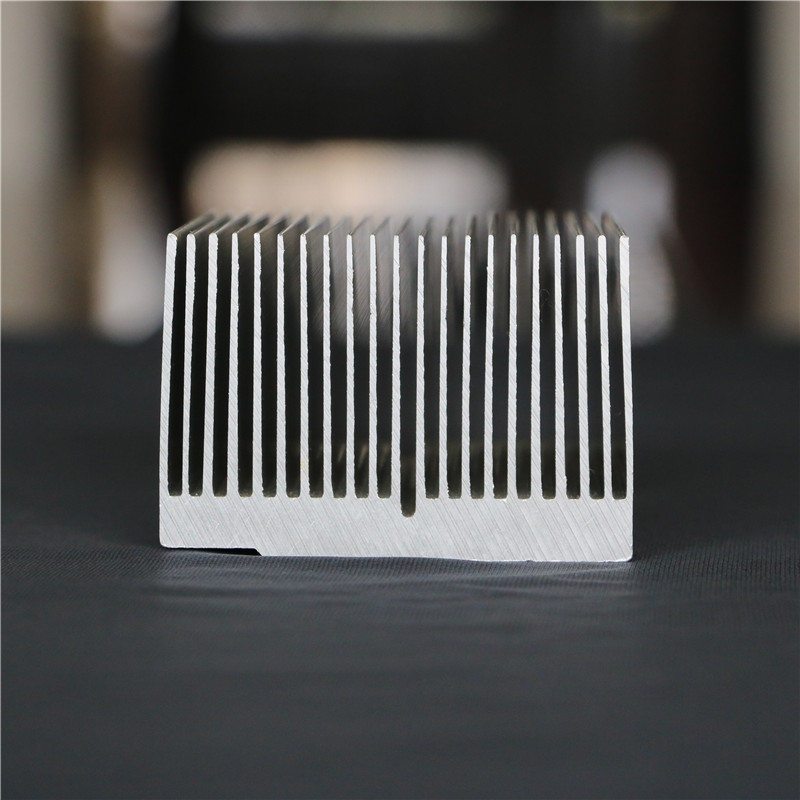
Heat sinks regulate temperature by transferring heat away from components and releasing it into the surrounding air. Their cooling performance depends on how efficiently they conduct and dissipate heat. Understanding this process is essential for selecting the right heat sink for electronics, machinery, and high-power systems.
Heat sinks rely on a two-stage thermal transfer process that includes conduction and convection. Each stage plays a distinct role in cooling sensitive components.
Conduction occurs when heat flows from the device to the heat sink through direct physical contact. The heat sink’s base absorbs the heat, spreading it across its structure.
Heat travels from the heat-producing source, such as a CPU or power module.
The heat sink’s material (often aluminum or copper) quickly absorbs this heat.
A smooth, flat interface improves contact and conduction efficiency.
Flat mounting surfaces
Thermal interface materials (TIMs)
High-conductivity metals such as copper
Once the heat sink absorbs heat, it must release it into the surrounding air. Convection enables this transfer, and its efficiency depends on airflow conditions.
Passive convection uses natural airflow around the heat sink.
Active convection enhances airflow with fans or blowers, significantly improving cooling performance.
Increasing airflow direction and speed
Designing fin spacing for optimal air movement
Using forced-air systems for high-power applications
Understanding the design choices behind heat sinks helps clarify how they maintain safe temperatures.
Heat sinks use fins, pins, or ridges to expand the surface area available for heat release. The greater the total surface area, the more heat can be dissipated into the air.
● Tall fins improve passive cooling.
● Dense fin arrays are ideal for forced-air systems.
Different devices require different cooling strategies based on their heat output.
The following table illustrates the differences and ideal uses of each cooling method:
Cooling Method | Description | Airflow Source | Best For |
Passive Convection | Uses natural airflow to remove heat | Natural air movement | Low-power devices, silent operation |
Active Convection | Uses fans to force airflow over fins | Fan-generated airflow | High-power components needing fast cooling |
Passive heat sinks rely entirely on natural convection to dissipate heat. They do not use external power sources such as fans or pumps, making them an energy-efficient and simple solution for low-power devices. These heat sinks are commonly used in electronic devices with moderate heat production, such as small appliances and mobile phones.
Advantages of Passive Heat Sinks
Energy Efficient: They don’t require power to operate, making them ideal for low-power devices.
Low Maintenance: Fewer moving parts reduce the likelihood of failure and the need for regular maintenance.
Cost-Effective: Ideal for budget-conscious applications that do not require advanced cooling.
Active heat sinks use fans or liquid cooling systems to increase airflow over the heat sink, enhancing the heat dissipation process. These heat sinks are essential in applications where high-performance devices generate a large amount of heat, such as gaming computers, servers, and industrial machinery.
Enhanced Cooling Efficiency: Fans or pumps force air or liquid across the heat sink, increasing the rate of heat dissipation.
Perfect for High-Performance Devices: Active cooling is ideal for systems that generate substantial amounts of heat, like high-end computers and servers.
Better for Complex Devices: Used in situations where the cooling demand fluctuates or where passive methods are insufficient.
Hybrid heat sinks combine both active and passive cooling. They are designed to operate as passive heat sinks under normal operating conditions, but when temperatures rise, they switch to active cooling using fans or liquid systems. These heat sinks are commonly used in environments with varying heat loads, providing a balance between energy efficiency and enhanced cooling.
Dual Cooling Mechanism: Switches between passive and active cooling depending on the thermal load.
Energy Efficiency with High Cooling Capacity: A flexible solution for systems with changing heat loads.
Popular in Computer Servers: Used in data centers and systems with fluctuating operational demands.
Heat sinks work by transferring heat away from sensitive components to maintain safe temperatures. Their use spans multiple industries where temperature control is essential for stable performance, efficiency, and safety. Understanding how heat sinks operate in different environments highlights their importance in modern technology.
Heat sinks are most commonly used in electronics and computing systems. Components like CPUs, GPUs, and power supplies generate significant heat, which, if not dissipated effectively, can cause system instability or damage. Heat sinks prevent this by transferring heat from these components into the surrounding air, allowing the system to operate smoothly and efficiently.
In modern computing, CPUs and GPUs are the heart of the system. These components generate large amounts of heat, especially during heavy workloads like gaming, video editing, or running simulations. Heat sinks are critical for preventing thermal throttling, where a processor slows down to avoid overheating.
● Prevent Overheating: Heat sinks help maintain optimal temperatures for CPUs and GPUs, ensuring stable performance.
● Improving Performance: By preventing overheating, heat sinks help processors run at their maximum clock speeds without slowing down due to heat.
Power supplies also generate significant heat. If this heat is not managed, it can lead to instability and even failure. Heat sinks are used in power supplies to dissipate the heat generated, ensuring that they continue to deliver steady and efficient power to devices.
● Prevent Overheating: Ensures that power supplies operate at stable temperatures.
● Enhance Longevity: Proper heat management extends the lifespan of power units.
Heat sinks are increasingly used in automotive and electric vehicle (EV) applications. In EVs, managing battery temperatures is essential for performance, safety, and battery longevity. Heat sinks help regulate battery temperatures during both charging and discharging cycles, ensuring safe operation.
In electric vehicles, heat sinks are used in battery cooling systems to prevent thermal runaway, where excessive heat can lead to dangerous conditions. By keeping the battery cool, heat sinks ensure the vehicle’s safety and performance.
● Battery Temperature Regulation: Heat sinks maintain optimal battery temperatures to prevent overheating and improve efficiency.
● Prevent Thermal Runaway: Ensures safe performance by regulating battery heat during operation.
In industrial machinery, heat sinks are used to manage heat generated by high-power systems, such as motors, power units, and other critical components. Large industrial machines generate considerable heat, and without effective cooling, these components can fail prematurely.
Motors, drives, and control units all require heat sinks to stabilize temperatures during extended operation.
● Protect critical components from heat damage
● Support continuous and stable operation
● Reduce downtime caused by overheating
Industrial heat sinks often use robust materials and large surface areas to handle intense heat output.
To better understand how heat sinks work in various environments, the following table compares their roles and cooling challenges.
Industry / System | Heat Source | Cooling Function of Heat Sink | Primary Benefit |
Computers (CPU/GPU) | Processing workload | Dissipates high-density chip heat | Prevents throttling and boosts performance |
Power Supplies | Voltage conversion | Stabilizes internal temperatures | Ensures steady power delivery |
Electric Vehicles | Battery charge/discharge | Regulates battery temperature | Prevents thermal runaway |
Industrial Machinery | Mechanical load | Releases heat from motors and drives | Improves operational reliability |
The material used for a heat sink plays a crucial role in its efficiency. Aluminum is the most commonly used material due to its lightweight nature and affordability. Copper is often used in high-performance systems because of its superior thermal conductivity, though it comes with a higher cost and weight.
Material | Thermal Conductivity | Weight | Cost | Best Use |
Aluminum | Good | Light | Low | General applications, affordable |
Copper | Excellent | Heavy | High | High-performance systems |
The size and design of a heat sink affect its cooling efficiency. Larger heat sinks with more surface area can dissipate more heat, but they may not be suitable for all devices due to space limitations. A properly designed heat sink ensures optimal heat transfer.
● Surface Area: The larger the surface area, the more heat can be dissipated.
● Compact Design: Ideal for small devices or space-constrained environments.
Heat sinks help devices stay cool and run safely by moving heat away from sensitive parts. They use conduction and convection to maintain stable temperatures in electronics and machinery. Different heat sink types support varied performance needs across industries. Alumag aluminum Tech (Taicang) co.,ltd offers reliable aluminum solutions that enhance cooling efficiency and support long-term device performance.
A: Heat sinks move heat away from components to keep devices stable.
A: Their fins increase airflow and improve heat transfer in electronics.
A: CPUs generate heavy heat, and heat sinks prevent overheating and damage.
A: Only devices that produce significant heat need heat sinks for protection.
A: Active heat sinks cool faster, while passive types suit low-heat devices.