Introduction
What “strength” really means for aluminum materials
When engineers talk about the strength of an aluminum material, they usually refer to several different mechanical indicators, including tensile strength, yield strength and fatigue performance. These values describe how much load a material can carry, how early it starts to permanently deform and how well it performs under repeated stress.
For high-performance applications, strength is not a single number. It is a combination of mechanical capability, stability during service and reliability after processing.
Why 7000 series aluminum is known as a high-strength Aluminum Material
Among all commercial aluminum alloys, 7000 series aluminum is widely recognized as one of the strongest Aluminum Material families. Its strength level is significantly higher than that of commonly used alloys such as 5000 and 6000 series.
Because of this advantage, 7000 series aluminum is frequently selected for lightweight structures, high-load components and safety-critical mechanical parts where ordinary aluminum materials cannot meet performance requirements.
Industries that care most about its strength
The industries that benefit most from the strength of 7000 series aluminum include aerospace, high-performance transportation equipment, industrial machinery and precision mechanical systems. In these sectors, reducing weight while maintaining high load capacity is a primary design objective.
Position of 7000 Series Aluminum Among All Aluminum Materials
Overview of aluminum alloy series and strength levels
Commercial wrought aluminum alloys are divided into different series based on their main alloying elements. Each series represents a different balance between strength, formability, corrosion resistance and processing performance.
From a strength perspective, the 7000 series is positioned at the very top level among commonly available aluminum materials.
Comparison with 5000 and 6000 series aluminum material
5000 series aluminum material is mainly known for good corrosion resistance and formability, while 6000 series aluminum material is widely used because of its balanced strength, good extrudability and excellent surface finish.
Compared with both of these families, 7000 series aluminum offers a much higher strength level, but at the same time requires more careful processing and application control.
High-strength and ultra-high-strength aluminum material concept
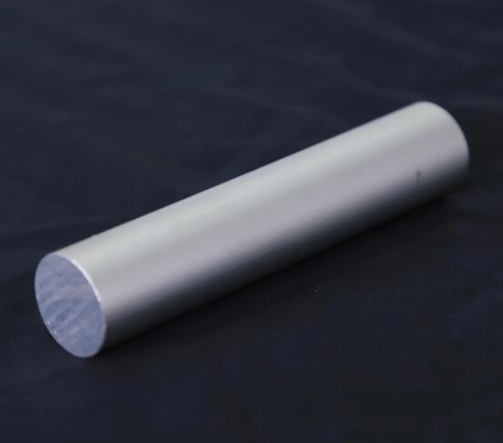
In many engineering classifications, 7000 series aluminum is grouped as high-strength or even ultra-high-strength aluminum material. This classification reflects its ability to approach the strength range of some structural steels while still maintaining the lightweight advantages of aluminum.
What Determines the Strength of 7000 Series Aluminum
Role of zinc as the main strengthening element
The primary reason 7000 series aluminum can reach such a high strength level is the use of zinc as the main alloying element. Zinc plays a key role in forming strengthening precipitates during heat treatment.
Influence of magnesium and copper
Magnesium and copper are usually added to further enhance the precipitation hardening effect. Their interaction with zinc allows the alloy to respond very effectively to solution treatment and artificial aging, which directly increases tensile and yield strength.
Precipitation hardening mechanism
7000 series aluminum is a typical precipitation-hardened Aluminum Material. During aging treatment, fine precipitates form within the aluminum matrix and restrict dislocation movement, which greatly increases resistance to deformation.
Microstructure and grain control
In addition to alloy chemistry, processing parameters such as extrusion, rolling and heat treatment control the final grain structure. A well-controlled microstructure contributes to stable and repeatable strength performance.
Typical Mechanical Strength of 7000 Series Aluminum
Tensile strength range
In common industrial tempers, many 7000 series aluminum grades exhibit tensile strength levels that are significantly higher than standard structural aluminum materials. This is one of the main reasons why they are used for demanding load-bearing parts.
Yield strength range
The yield strength of 7000 series aluminum is also very high, meaning the material can resist permanent deformation under high stress. For structural designers, this property is often more important than ultimate tensile strength.
Elongation and ductility overview
Although 7000 series aluminum is very strong, its ductility is usually lower than that of softer aluminum materials. This means that higher strength is achieved at the expense of forming capability.
Why actual strength depends on product form and temper
The real strength of 7000 series aluminum always depends on its temper condition and product form, such as extrusion, plate or bar. The same alloy grade can show different mechanical performance after different processing routes.
Strength Comparison with Other Aluminum Materials
7000 series versus 6000 series aluminum material
Compared with 6000 series aluminum material, 7000 series aluminum typically provides much higher yield and tensile strength. However, 6000 series alloys offer better weldability and easier processing.
7000 series versus 5000 series aluminum material
5000 series aluminum material relies mainly on solid-solution strengthening and is therefore much lower in strength. It is generally selected for corrosion resistance rather than high mechanical performance.
7000 series versus 2000 series aluminum material
Both 7000 and 2000 series belong to high-strength aluminum material families. In many cases, 7000 series aluminum offers higher peak strength, while 2000 series alloys are often favored for certain temperature or toughness requirements.
Strength Comparison with Steel and Other Structural Materials
How close it is to low-carbon steel in strength
In some tempers and grades, 7000 series aluminum can reach strength levels that are comparable to low-carbon structural steel. This makes it attractive for lightweight structural designs.
Strength-to-weight ratio comparison
Although steel may still offer higher absolute strength in many cases, 7000 series aluminum provides a much higher strength-to-weight ratio. This advantage is critical for transportation and motion systems.
Why lightweight design favors high-strength aluminum material
By using high-strength aluminum material such as the 7000 series, designers can significantly reduce component mass without sacrificing structural integrity.
Strength Differences Among Common 7000 Series Grades
High-strength focused grades
Some grades are designed mainly to achieve maximum tensile and yield strength. These grades are widely used in aerospace structures and high-load mechanical parts.
Balanced performance grades
Other grades focus on balancing strength with improved corrosion resistance and toughness. These are more suitable for general industrial and transportation applications.
Typical grade-to-grade strength variation
Even within the same 7000 series family, strength levels can vary noticeably between different grades and compositions. This makes grade selection an important part of engineering design.
Influence of Temper Condition on Strength
T6 strength characteristics
The T6 temper is commonly used to achieve peak strength. After solution heat treatment and artificial aging, 7000 series aluminum reaches its highest strength level.
T73 and T74 strength characteristics
T73 and T74 tempers slightly reduce peak strength but significantly improve resistance to stress corrosion cracking. These tempers are often selected when long-term reliability is critical.
Strength trade-off between corrosion resistance and peak strength
Higher strength does not always mean better performance. In some environments, slightly lower strength combined with improved corrosion resistance can provide better overall service life.
Why temper is as important as alloy grade
For 7000 series aluminum, temper condition has a major influence on mechanical properties. Selecting the correct temper is therefore just as important as choosing the correct alloy grade.
Strength Differences by Product Form
Extruded profiles
Extruded profiles made from 7000 series aluminum are commonly used in customized structural systems. Their strength depends strongly on extrusion parameters and subsequent heat treatment uniformity.
Bars and rods
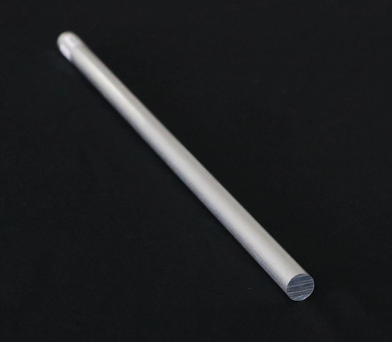
Bars and rods generally show stable and predictable strength and are widely used as raw material for high-strength machined parts.
Plates and thick plates
Plates and thick plates are often selected for heavy-duty machined components and structural panels. In thick sections, strength uniformity through the thickness becomes an important consideration.
Tubes and seamless pipes
Tubes made from 7000 series aluminum are used mainly for lightweight load-bearing structures and mechanical assemblies where high bending and torsional strength are required.
Machined components
For machined parts, the effective strength depends not only on the base Aluminum Material but also on residual stress, surface condition and machining quality.
Fatigue Strength of 7000 Series Aluminum
Why fatigue strength is critical in real applications
In many real engineering structures, components fail due to repeated loading rather than a single overload event. Fatigue performance is therefore a key part of evaluating how strong 7000 series aluminum really is.
Typical fatigue behavior of high-strength aluminum material
7000 series aluminum generally shows good fatigue resistance when surface quality and geometry are well controlled. However, its fatigue behavior is more sensitive to surface defects than lower-strength aluminum materials.
Influence of surface condition and defects
Scratches, machining marks and small surface flaws can significantly reduce fatigue life. For high-strength aluminum material, careful surface control and finishing are essential to fully utilize its strength.
Strength Requirements Under Aluminum Material Standards
How strength is defined and verified under standards
In international supply and engineering projects, the strength of aluminum products is verified according to recognized standards issued by
ASTM International.
These ASTM Aluminum Material standards define testing methods, sampling requirements and acceptance criteria for mechanical properties.
Why standards are essential for high-strength aluminum material
For 7000 series aluminum, standardized testing and certification ensure that delivered products meet specified strength levels and provide consistent and traceable quality for critical applications.
Fracture Toughness and Damage Tolerance
Why fracture toughness matters for high-strength aluminum
When engineers ask how strong 7000 series aluminum is, they often focus on tensile or yield strength. However, for real structures, fracture toughness is equally important. It describes how well an Aluminum Material can resist crack growth once a defect or micro-crack already exists.
Because 7000 series aluminum is designed for very high strength, its fracture behavior must be carefully evaluated in safety-critical applications.
Typical toughness characteristics of 7000 series aluminum
In general, 7000 series aluminum offers moderate fracture toughness compared with lower-strength aluminum materials. High-strength grades tend to sacrifice some toughness in order to achieve higher mechanical performance.
This is one of the reasons why alloy and temper selection is carefully controlled in aerospace and high-load engineering projects.
Differences between high-strength and high-toughness grades
Within the 7000 series family, some grades are developed specifically to improve toughness and damage tolerance. These grades are often selected for thick plates and critical load-bearing structures, even if their peak strength is slightly lower.
Strength Stability Under Different Service Conditions
Strength behavior at elevated temperature
7000 series aluminum is not designed for continuous high-temperature service. As temperature increases, the strengthening precipitates gradually lose effectiveness, and the strength of the Aluminum Material decreases.
For applications exposed to moderate or high operating temperatures, this strength reduction must be considered during design.
Strength behavior at low temperature
At low temperatures, 7000 series aluminum generally maintains its strength and does not show brittle behavior. This makes it suitable for cold-environment equipment and transportation systems where stable mechanical performance is required.
Long-term service stability
Over long service periods, strength stability depends strongly on operating temperature, applied stress and environmental conditions. Proper temper selection plays a key role in maintaining reliable long-term strength.
Strength Loss During Manufacturing and Processing
Effect of welding on strength
Welding is one of the most critical processes affecting the strength of 7000 series aluminum. The heat-affected zone experiences significant softening because the original precipitation-hardened structure is partially destroyed.
As a result, the local strength of the welded region is much lower than that of the base Aluminum Material.
Effect of forming and straightening
Cold forming and straightening introduce plastic deformation and residual stress. While these processes usually do not drastically reduce static strength, they can influence fatigue performance and dimensional stability.
Machining-related strength considerations
Machining itself does not change the intrinsic strength of the material, but surface condition, tool marks and residual stress can strongly affect fatigue strength and crack initiation.
Strength and Corrosion Interaction
Relationship between strength and corrosion sensitivity
As the strength level of aluminum increases, its sensitivity to certain types of corrosion also tends to increase.
For 7000 series aluminum, this interaction is particularly important because very high strength is achieved through complex precipitation systems.
Stress corrosion cracking in high-strength aluminum material
Stress corrosion cracking is one of the most critical risks associated with high-strength aluminum material.
Under the combined effect of tensile stress and corrosive environments, localized cracking can occur even when applied stress is well below the static strength limit.
Influence of temper selection on strength reliability
Tempers such as T73 and T74 are commonly used to improve resistance to stress corrosion cracking. Although their peak strength is slightly lower than T6, their overall strength reliability in real environments is often better.
Strength Design Considerations for Engineers
Design allowables versus laboratory strength
Published strength values are usually obtained from standardized laboratory tests. In real structures, engineers must use design allowables that include safety margins and account for variability in manufacturing and service conditions.
Safety factors for high-strength aluminum material
Because 7000 series aluminum is often used in critical load paths, conservative safety factors are commonly applied, especially when fatigue and corrosion risks are present.
Structural design principles for 7000 series aluminum
Good structural design focuses on smooth load transfer, minimized stress concentration and proper section geometry. These principles help fully utilize the high strength of 7000 series aluminum while avoiding premature failure.
Strength Requirements Under Aluminum Material Standards
How mechanical strength is specified under standards
In international engineering and procurement, the required strength of aluminum products is specified according to recognized Aluminum Material standards. These standards define minimum tensile strength, yield strength and elongation for different product forms and tempers.
Typical strength control under ASTM Aluminum Material systems
For many global projects, strength requirements for 7000 series aluminum are verified under ASTM Aluminum Material specifications issued by
ASTM International.
These standards ensure consistent testing procedures, sampling methods and acceptance criteria.
Why standardized strength control is essential
For high-strength aluminum material, standardized verification is essential to ensure that delivered products truly meet design expectations and can be reliably used in structural applications.
How Strength Is Tested and Verified
Tensile testing
Tensile testing is the primary method used to evaluate the strength of 7000 series aluminum. It provides tensile strength, yield strength and elongation values that are directly compared with specification requirements.
Hardness testing
Hardness testing is often used as a quick production control method. Although hardness cannot replace tensile testing, it helps monitor heat treatment consistency.
Batch inspection and quality control
Mechanical testing is normally performed on representative samples from each production batch to confirm that the Aluminum Material meets the specified strength level.
Traceability of test results
For critical applications, full traceability from raw material to final product is required, ensuring that every test result can be linked to a specific production batch.
Strength Differences Between Laboratory Data and Real Components
Influence of part geometry
Complex geometry and varying cross-section thickness can lead to non-uniform cooling and aging during heat treatment, which may result in local strength variation.
Influence of surface quality and machining marks
Surface condition strongly affects fatigue strength. Even when laboratory tensile strength is high, poor surface quality can significantly reduce real component performance.
Residual stress and straightness effects
Residual stresses generated during processing may influence distortion and fatigue behavior, especially in precision components.
Typical High-Strength Applications of 7000 Series Aluminum
Aerospace structural components
7000 series aluminum is widely used in aircraft structural parts where high strength and low weight are essential for performance and safety.
Automotive and motorsport components
In performance vehicles and motorsport, this Aluminum Material is used for suspension parts, brackets and high-load connectors.
Industrial machinery and automation equipment
High-load machine parts, moving systems and structural supports frequently use 7000 series aluminum to reduce mass while maintaining rigidity.
High-load extruded structural profiles
Customized extruded profiles made from 7000 series aluminum are increasingly used for integrated structural systems in advanced industrial equipment.
When 7000 Series Aluminum Is Not the Best Strength Solution
When corrosion resistance is more critical than strength
In highly corrosive environments, lower-strength aluminum materials with better corrosion performance may offer more reliable service life.
When weldability is the dominant requirement
For structures that rely heavily on welding, other aluminum materials are generally more suitable than 7000 series aluminum.
When cost-performance balance favors other aluminum material
If the required strength level can be met by 6000 series or 5000 series aluminum material, these alternatives often provide better overall economy.
Frequently Asked Questions
Is 7000 series aluminum the strongest aluminum material?
It is among the strongest commercially available aluminum materials, but it is not always the best choice for every application.
How strong is 7000 series aluminum compared with 6061?
In most tempers, 7000 series aluminum offers significantly higher tensile and yield strength than 6061 aluminum material.
Does higher strength always mean better performance?
No. Higher strength often comes with lower corrosion resistance, lower weldability and higher processing sensitivity.
Does heat treatment always increase strength?
Heat treatment can significantly increase strength, but improper heat treatment may lead to unstable properties or reduced reliability.
Do international projects require ASTM Aluminum Material strength compliance?
For most international and high-risk projects, compliance with ASTM Aluminum Material strength requirements is strongly recommended.
Conclusion
Summary of its true strength advantages
7000 series aluminum provides one of the highest strength levels available among aluminum materials, offering excellent strength-to-weight performance for demanding applications.
When 7000 series aluminum provides the best strength solution
It is most suitable when lightweight design, high structural strength and precision performance are critical, and when welding and severe corrosion exposure can be minimized.
Final guidance for selecting high-strength Aluminum Material
To fully benefit from the strength of 7000 series aluminum, engineers and buyers should select appropriate grades and tempers, verify mechanical properties under recognized standards and carefully evaluate service environment and manufacturing processes.
As a professional customized aluminum extrusion manufacturer, Alumag Group has focused on high-strength aluminum solutions since 1994. The company supplies customized 7000 series aluminum profiles, bars, tubes, plates and CNC machined parts for demanding industrial and international projects. With integrated extrusion, heat treatment and machining capabilities, Alumag supports customers from alloy selection to finished components, helping ensure stable quality, reliable performance and compliance with recognized ASTM Aluminum Material requirements.


