Tel:+86-512-53640771-125 E-mail: export@alumag.com.cn
- All
- Product Name
- Product Keyword
- Product Model
- Product Summary
- Product Description
- Multi Field Search

Views: 0 Author: Site Editor Publish Time: 2025-10-31 Origin: Site


Aluminum extrusion profiles are versatile and essential materials widely used in various industries, from construction and automotive to electronics and packaging. The process of creating aluminum profiles through extrusion involves shaping aluminum alloy into a variety of forms, allowing manufacturers to produce customized shapes for different purposes. In this article, we will explore the types of aluminum extrusion profiles, their applications, and how to identify strong, high-quality extrusions.
Aluminum extrusion profiles refer to shapes and sections created by forcing aluminum through a die to form specific shapes. The extrusion process allows aluminum to be shaped into almost any form with high precision and repeatability. These profiles can range from simple geometric shapes like squares and rectangles to more complex designs such as hollow tubes, channels, and intricate custom profiles.
Extrusion profiles are primarily made from aluminum alloys, chosen for their light weight, strength, and corrosion resistance. The process itself can be used to create products for various industries, offering high efficiency and cost-effectiveness.
The aluminum extrusion process begins with the selection of a suitable aluminum alloy, such as 6063, 6061, or 7005, based on the desired properties for the final product. These alloys are heated to a temperature between 400°F and 900°F, depending on the alloy, until they become malleable enough to be forced through a die using a press.
The aluminum material (ASTM standards) used in extrusion is carefully controlled to ensure consistent quality. The die used to shape the aluminum can be custom-designed to meet specific customer requirements. After the material is extruded through the die, it is cooled, cut into desired lengths, and undergoes secondary processes such as anodizing, painting, or welding.
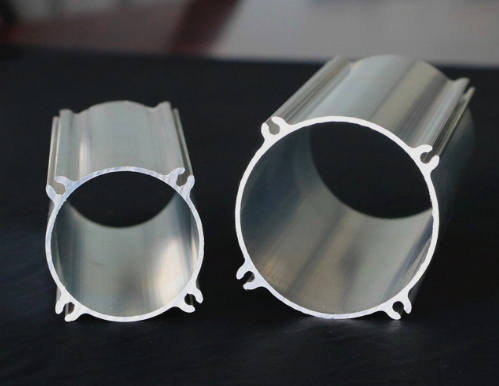
Aluminum extrusion profiles come in a variety of shapes and sizes, each suited for different applications. The most common types include:
Solid Profiles
Solid profiles are the simplest type of aluminum extrusions and are often used in framing systems, structural components, and decorative applications. These profiles are usually round, square, or rectangular in shape and do not have any hollow sections.
Hollow Profiles
Hollow profiles have a void or channel running through their center. These profiles are typically used in structural components that require a combination of strength and lightweight properties. They are commonly used in building facades, windows, and transportation applications.
T-Slot Profiles
T-slot aluminum extrusions are used extensively in industrial applications. These profiles feature a series of slots along their length, which allow for easy attachment of components without the need for welding or special tools. They are widely used in modular construction, such as workstations, frames, and machine bases.
Angle Profiles
Angle profiles are L-shaped extrusions used in structural and framing applications. These profiles offer strength and stability and are commonly used in machinery frames, construction supports, and shelving systems.
Custom Profiles
Custom aluminum extrusion profiles are designed for specific applications and are tailored to meet the unique requirements of the project. These profiles can range from complex shapes used in aerospace and automotive industries to specialized sections for electronics and architectural design.
Aluminum extrusions are classified based on the shape and application of the profile. Below are some key distinctions between the most common types of profiles:
| Profile Type | Characteristics | Common Applications |
|---|---|---|
| Solid Profiles | Simple, non-hollow shapes such as square, round, and rectangular. | Framing, structural components, furniture, lighting, and decorative elements. |
| Hollow Profiles | Profiles with a hollow section in the center. | Structural applications, window and door frames, automotive components, and piping systems. |
| T-Slot Profiles | Feature grooves or slots along the length of the profile. | Modular construction, workstations, machine frames, and equipment bases. |
| Angle Profiles | L-shaped extrusions. | Construction supports, machinery frames, shelving systems, and custom brackets. |
| Custom Profiles | Profiles designed to meet specific project requirements. | Aerospace, automotive, electronics, architectural, and specialized engineering applications. |
Each type of profile serves a specific purpose and can be customized based on the design requirements of the project. The ability to create custom aluminum extrusion profiles makes this process incredibly versatile.
The quality of aluminum extrusion profiles depends on a combination of factors that influence their strength, durability, and suitability for various applications. Below are key considerations for identifying a high-quality aluminum extrusion profile:
The choice of aluminum alloy is crucial for ensuring the final profile has the required strength, corrosion resistance, and durability. Common aluminum alloys for extrusion include 6061 and 6063, which are both highly regarded for their excellent workability and strength-to-weight ratio. Aluminum material that meets ASTM standards ensures that the extrusion will be of high quality.
A high-quality extrusion profile must be produced with precision. The die design, extrusion speed, and cooling process all contribute to the final product’s accuracy. Profiles must be free from defects like warping, cracks, or inconsistencies in wall thickness. A tightly controlled manufacturing process ensures that the profiles meet the necessary specifications.
The surface finish of the aluminum extrusion plays a significant role in its appearance and performance. Anodizing, powder coating, and other treatments can be used to improve corrosion resistance, enhance aesthetics, and provide additional durability. A high-quality profile will have a smooth, even surface without blemishes or imperfections.
The strength of aluminum extrusions depends on the alloy used and the final heat treatment. Profiles made from alloys like 6061-T6 exhibit high tensile strength and are ideal for structural and load-bearing applications. The quality of the aluminum extrusion profile will determine how well it performs under stress, temperature changes, and environmental exposure.
Aluminum is a highly sustainable material due to its recyclability. High-quality extrusion profiles are often made from recycled aluminum, which reduces energy consumption and environmental impact. Many manufacturers are increasingly focusing on sustainable aluminum extrusions that are made from 100% recycled material and are also recyclable at the end of their life.
To ensure that an aluminum extrusion profile is of high quality and meets the requirements of the intended application, several factors must be considered:
Alloy Choice: The right alloy ensures the extrusion is strong, lightweight, and resistant to corrosion. Popular choices like 6061, 6063, and 7075 offer varying strengths and are ideal for different applications.
Manufacturing Expertise: The aluminum profile manufacturing process must be carried out by experienced professionals who understand the intricacies of extrusion, from the selection of raw materials to the final finishing treatments.
Quality Control: Stringent quality control measures must be in place to ensure that every batch of extrusions is produced to the highest standards. This includes checking for dimensional accuracy, surface finish, and structural integrity.
Customization Options: A great aluminum extrusion manufacturer offers the flexibility to design custom profiles that meet the specific needs of the customer. Custom profiles are especially important in industries such as aerospace, automotive, and construction.
Cost-effectiveness: While quality is paramount, cost is always a consideration. Manufacturers that can offer high-quality aluminum extrusions at competitive prices provide excellent value, especially for large-scale projects.
Sustainability: The growing demand for sustainable materials means that great aluminum extrusions are not only strong and durable but also environmentally friendly. Many manufacturers use sustainable production methods and recycle aluminum to reduce environmental impact.
Aluminum extrusion profiles are an integral part of modern manufacturing, offering versatile solutions for a wide range of applications. From simple framing systems to complex custom designs, aluminum extrusions provide strength, durability, and aesthetic appeal. When choosing an aluminum extrusion profile, it’s essential to consider factors such as alloy selection, precision in manufacturing, and surface treatments to ensure a high-quality end product.
With the continued demand for sustainable solutions, aluminum remains one of the most eco-friendly materials available, particularly when produced with recycled content. By understanding the types, applications, and quality indicators of aluminum extrusion profiles, industries can make informed decisions that maximize performance and minimize environmental impact.
In conclusion, aluminum extrusion profiles provide an exceptional balance of strength, lightweight properties, and sustainability, making them indispensable in a wide variety of industries. Whether you are designing a new product or upgrading existing systems, understanding the ins and outs of aluminum extrusion can help you make the right choices for your needs.